
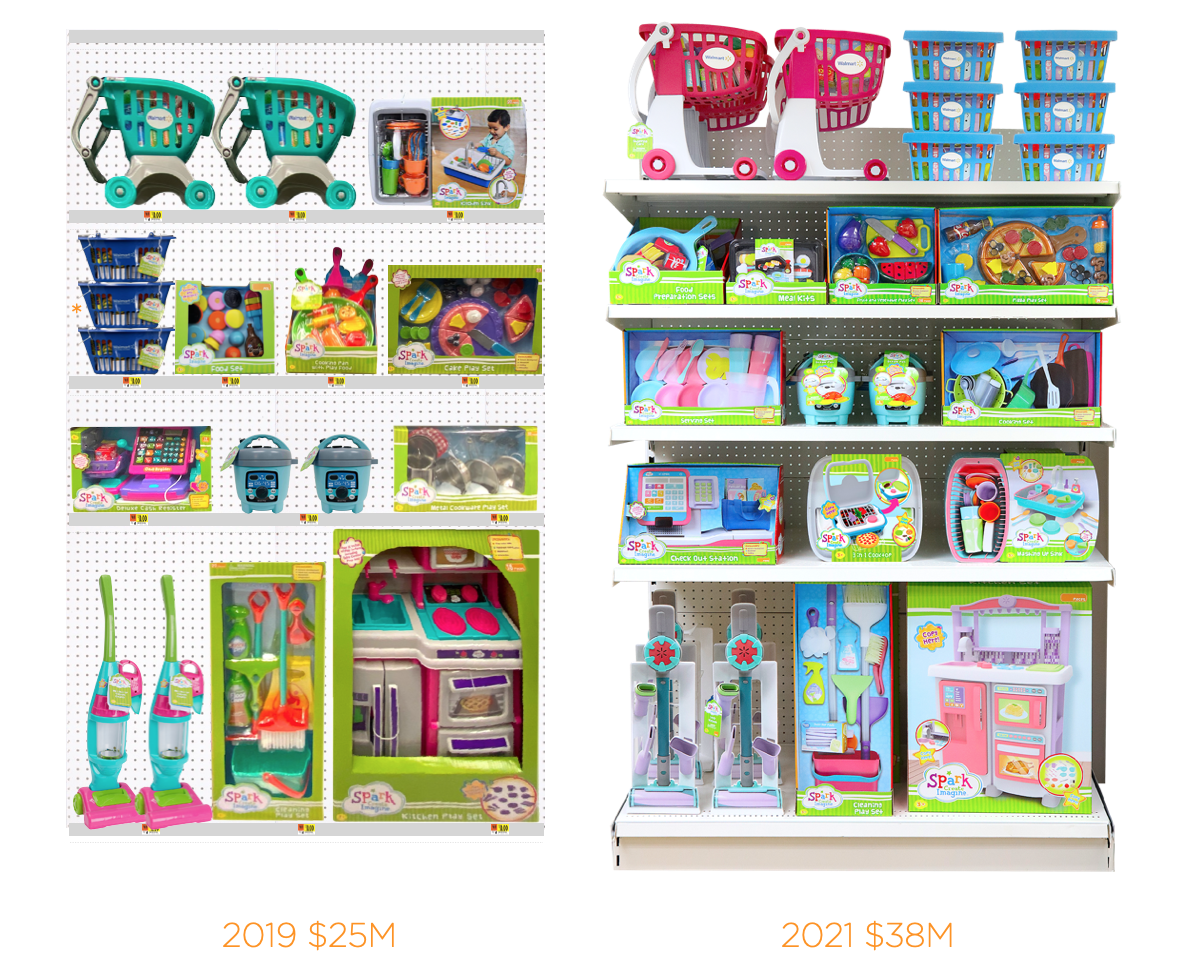
Walmart challenged us to create a complete four-foot modular program for the Spark private-label brand. I began by building a merchant-centric design strategy—aligning consumer needs and creative direction with financial payback, margin targets, timelines, and manufacturing feasibility. Positioned between Walmart’s merchant team and our manufacturing partner in Asia, we could balance consumer insight with retail realities and supply-chain constraints. Despite launching during COVID, the team moved from first meeting to product on shelf in just 18 months, ultimately increasing category yield by over 30%.
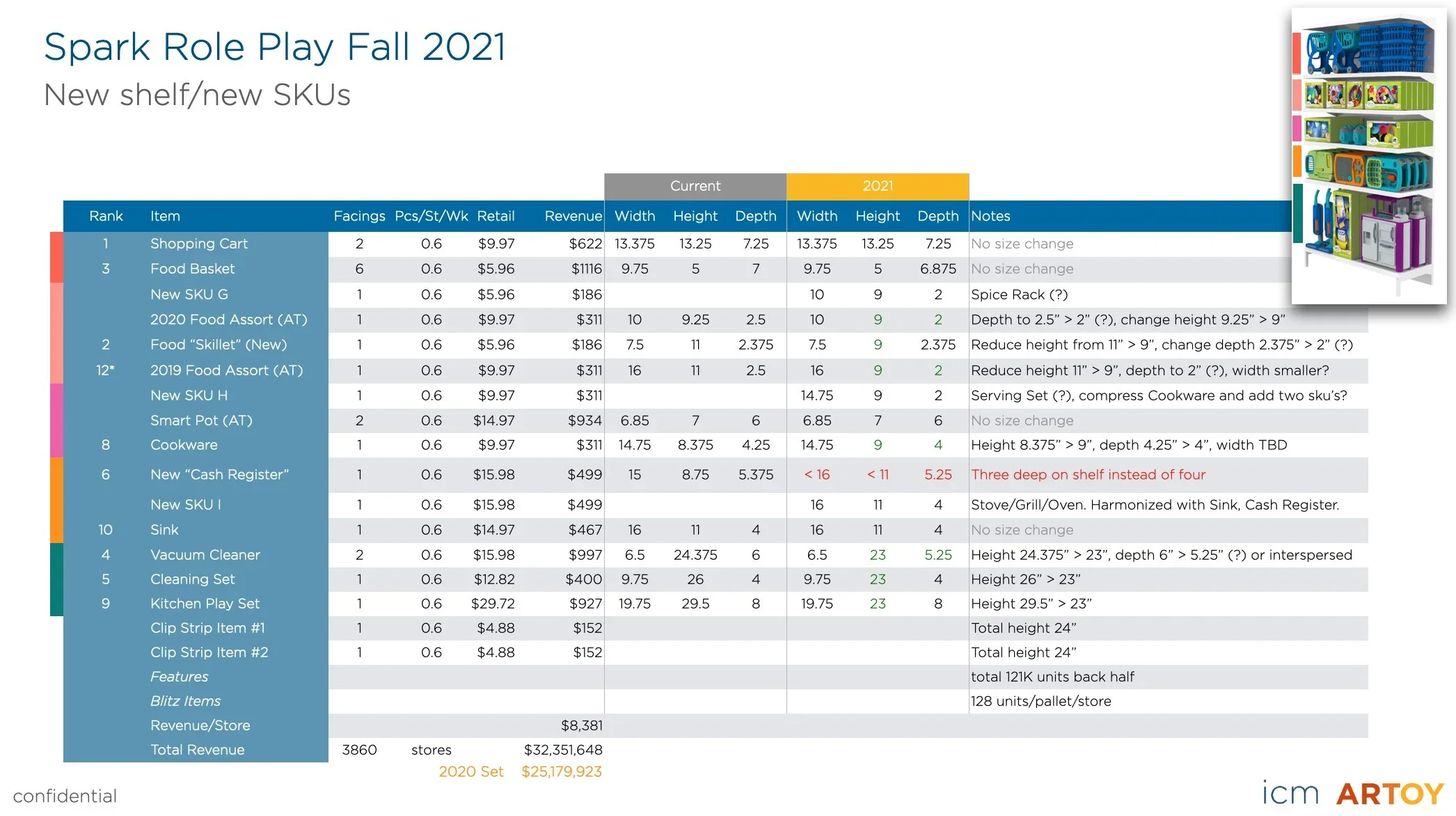
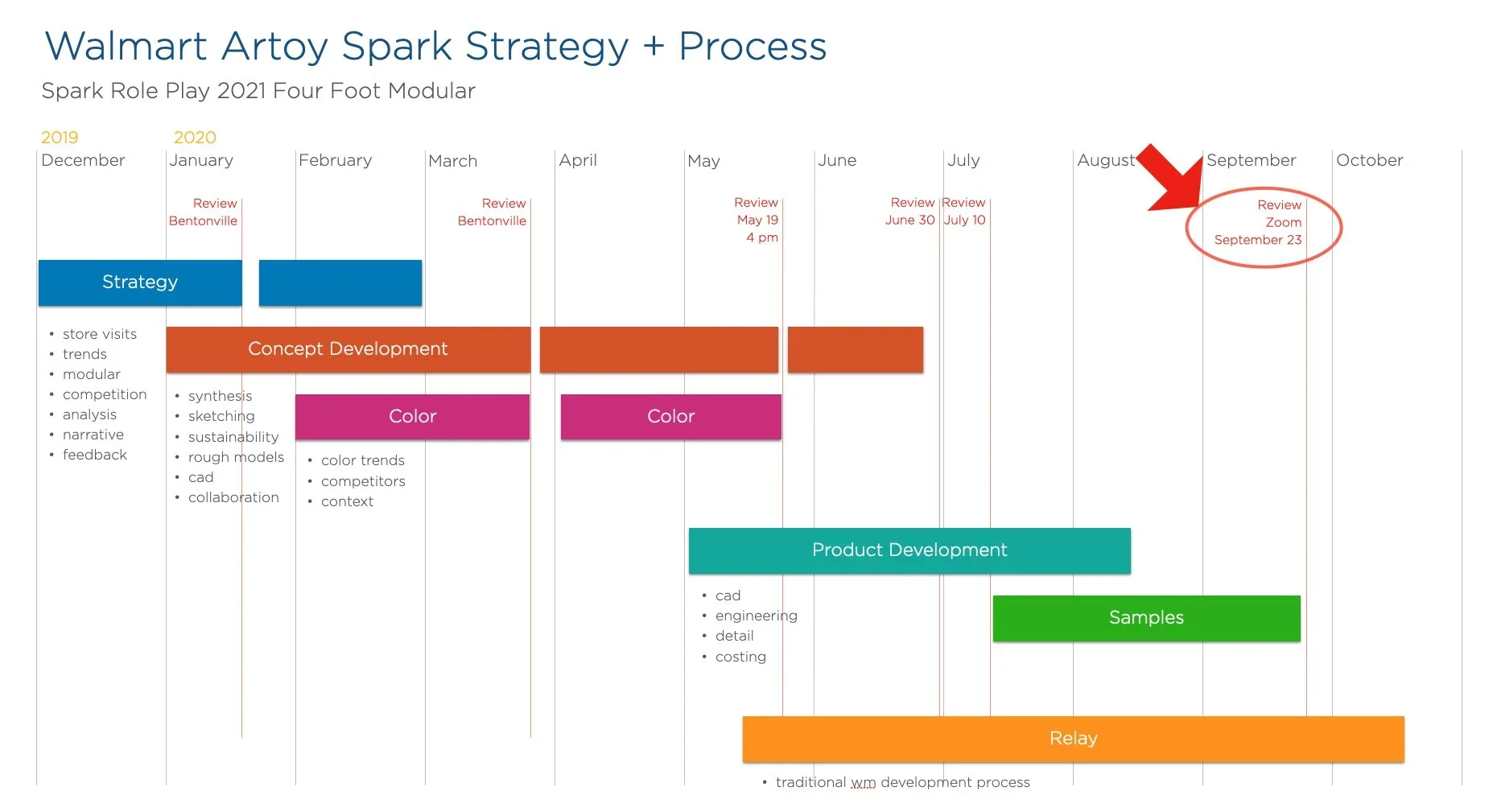
This program required deep integration with Walmart’s merchant team and product developer. I maintained the relationship day-to-day, ensuring alignment on costing, timelines, safety, packaging, and the broader merchandising vision. While design is often portrayed as purely aesthetic, the economics were just as critical. I spent significant time optimizing price points, volumes, and margins so the line could succeed both creatively and financially.
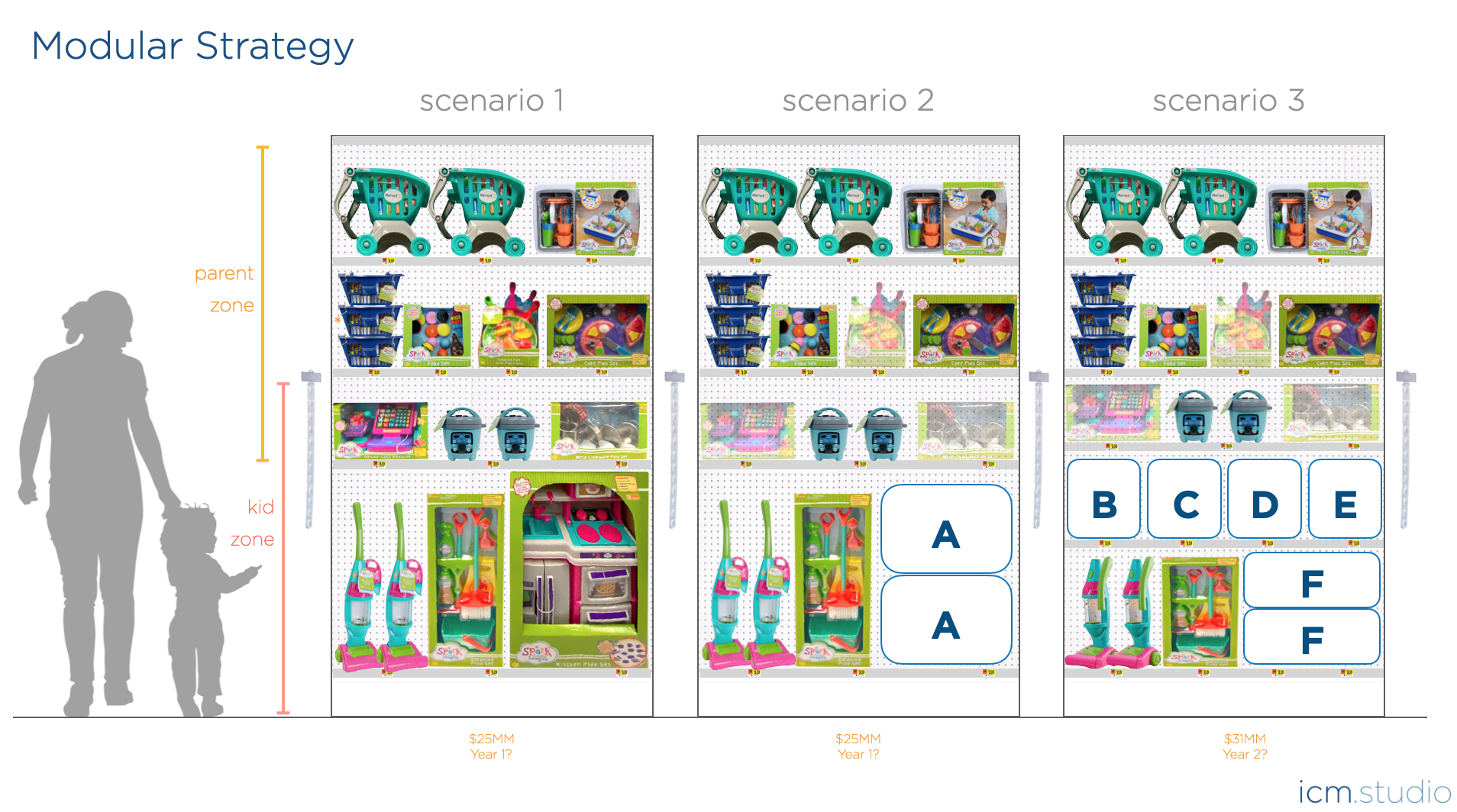
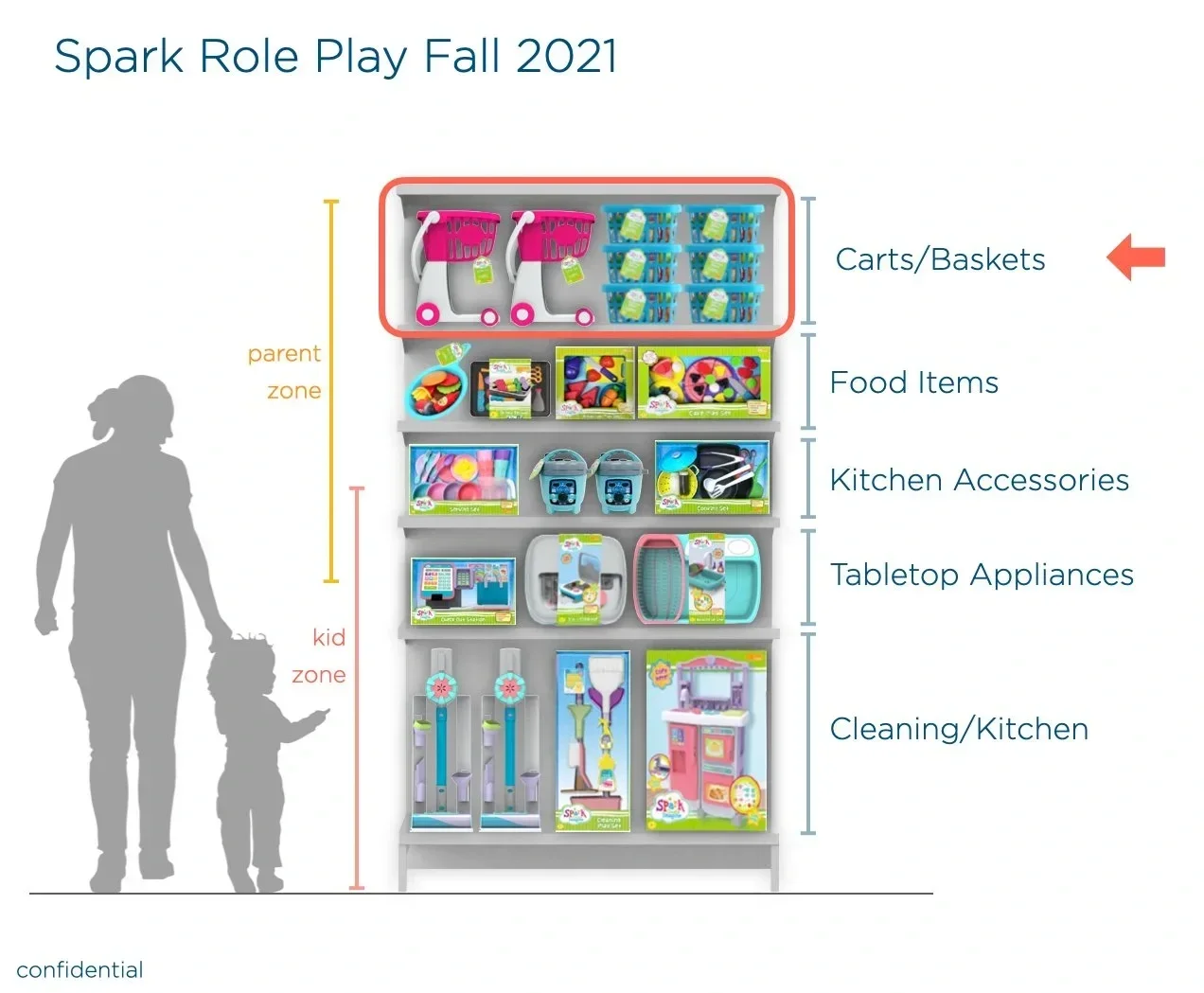
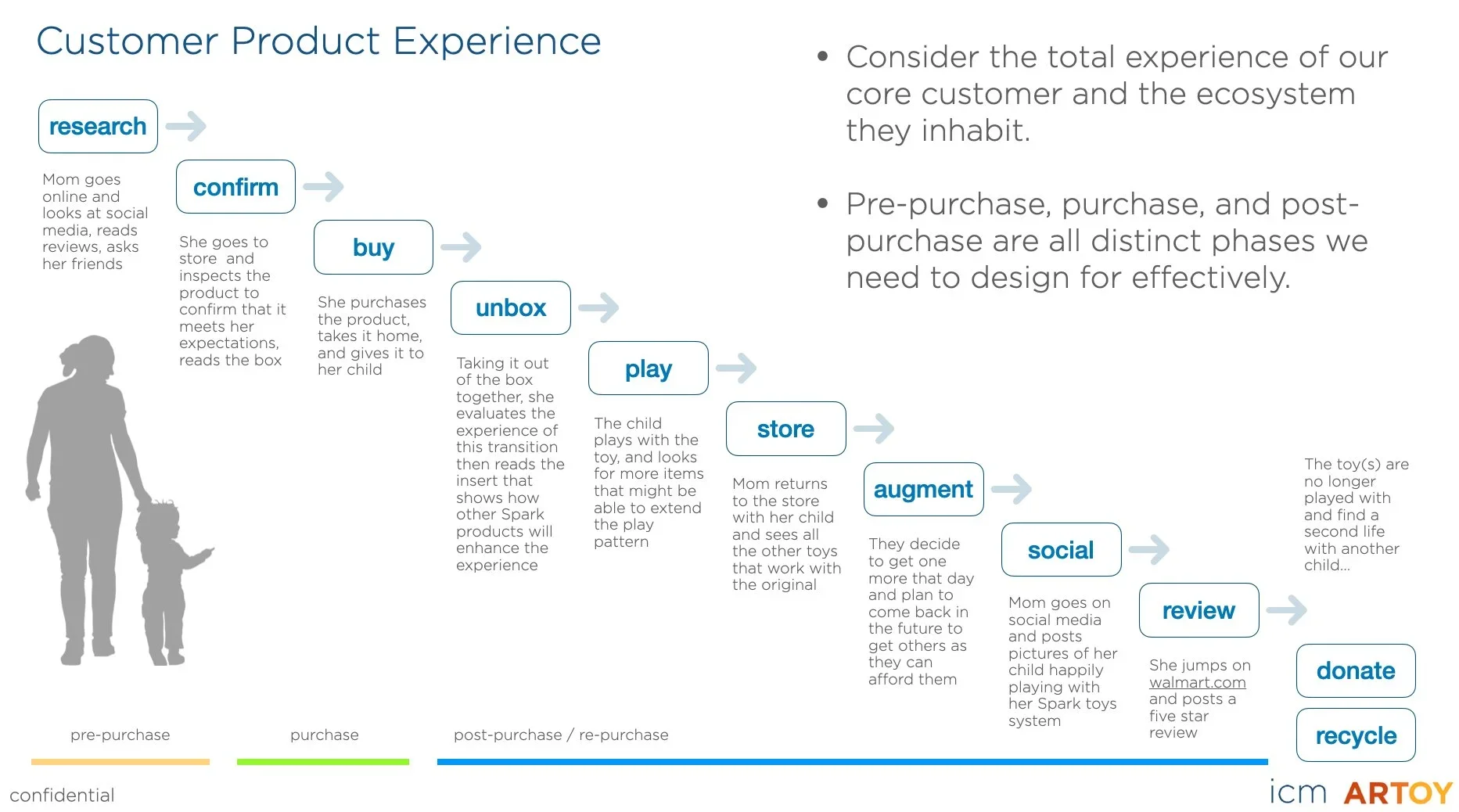
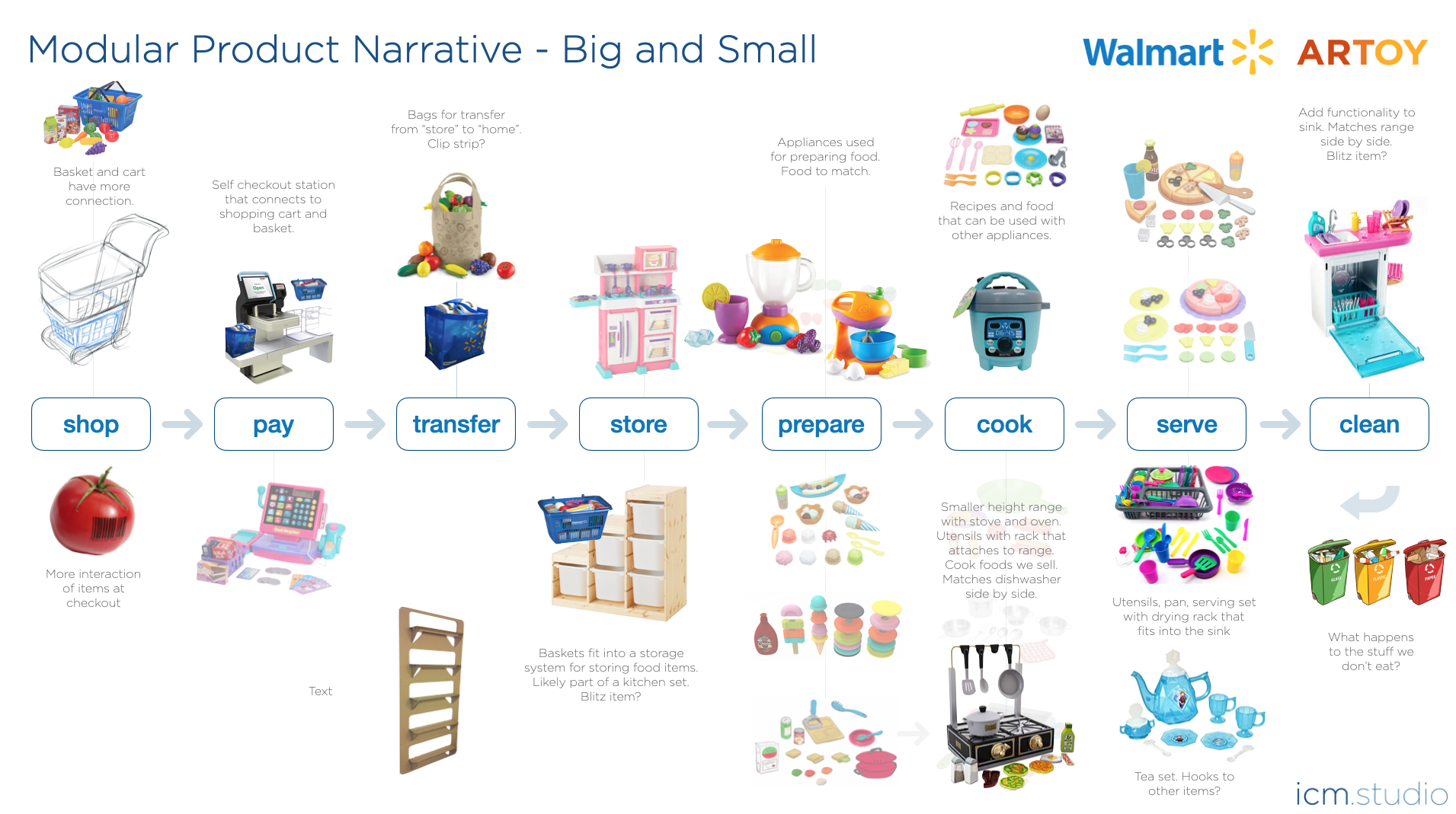
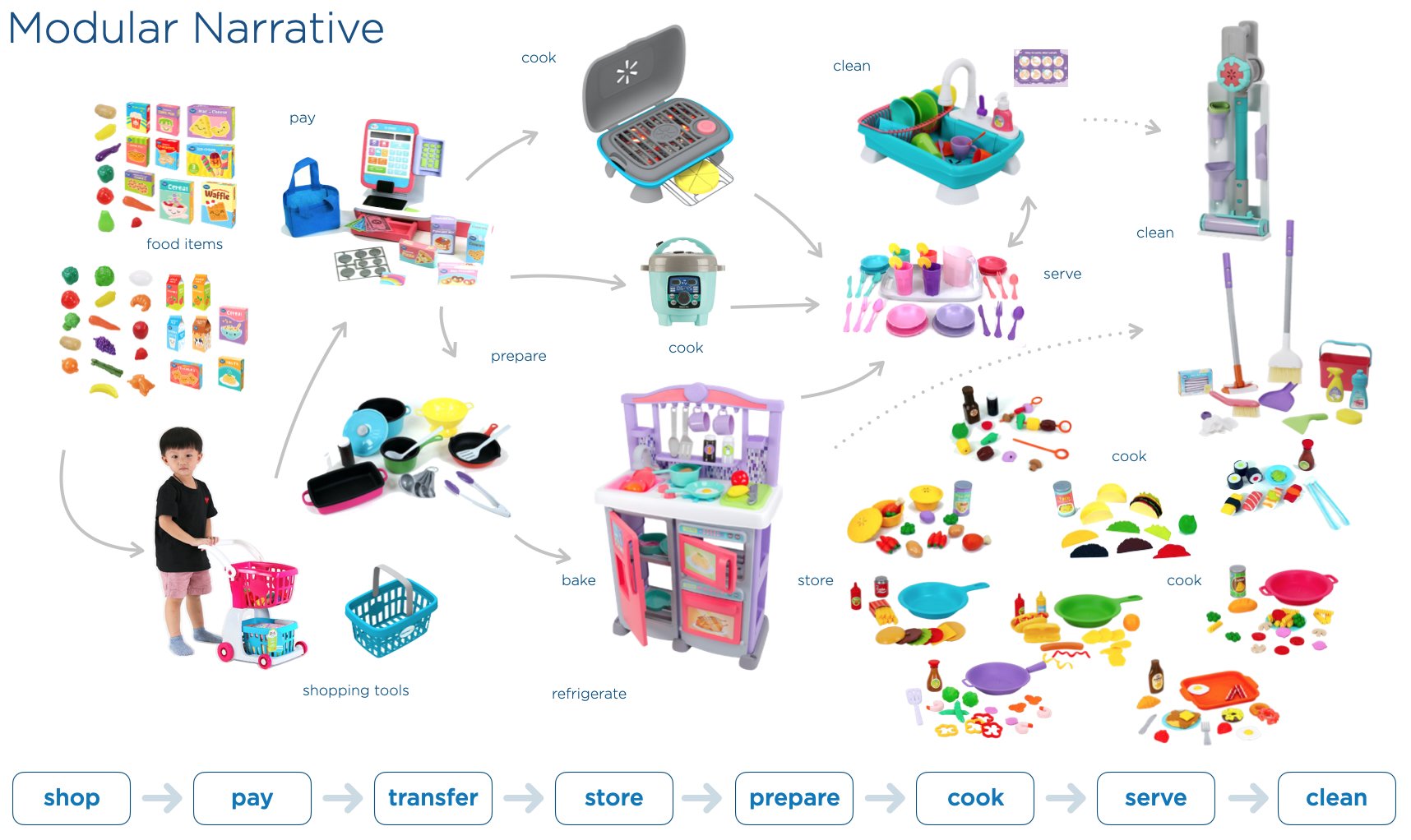
Over nine months, I designed or art-directed more than 100 toys, aligning aesthetics, functionality, and manufacturability across multiple sub-categories. Deep research into trends, competitive products, and real play behaviors shaped a unified form language and shared play patterns across the line. To support the total consumer experience, we built a clear system—using simple action verbs and repeatable visual cues—to help families understand how products connected and encourage expansion within the Spark line.
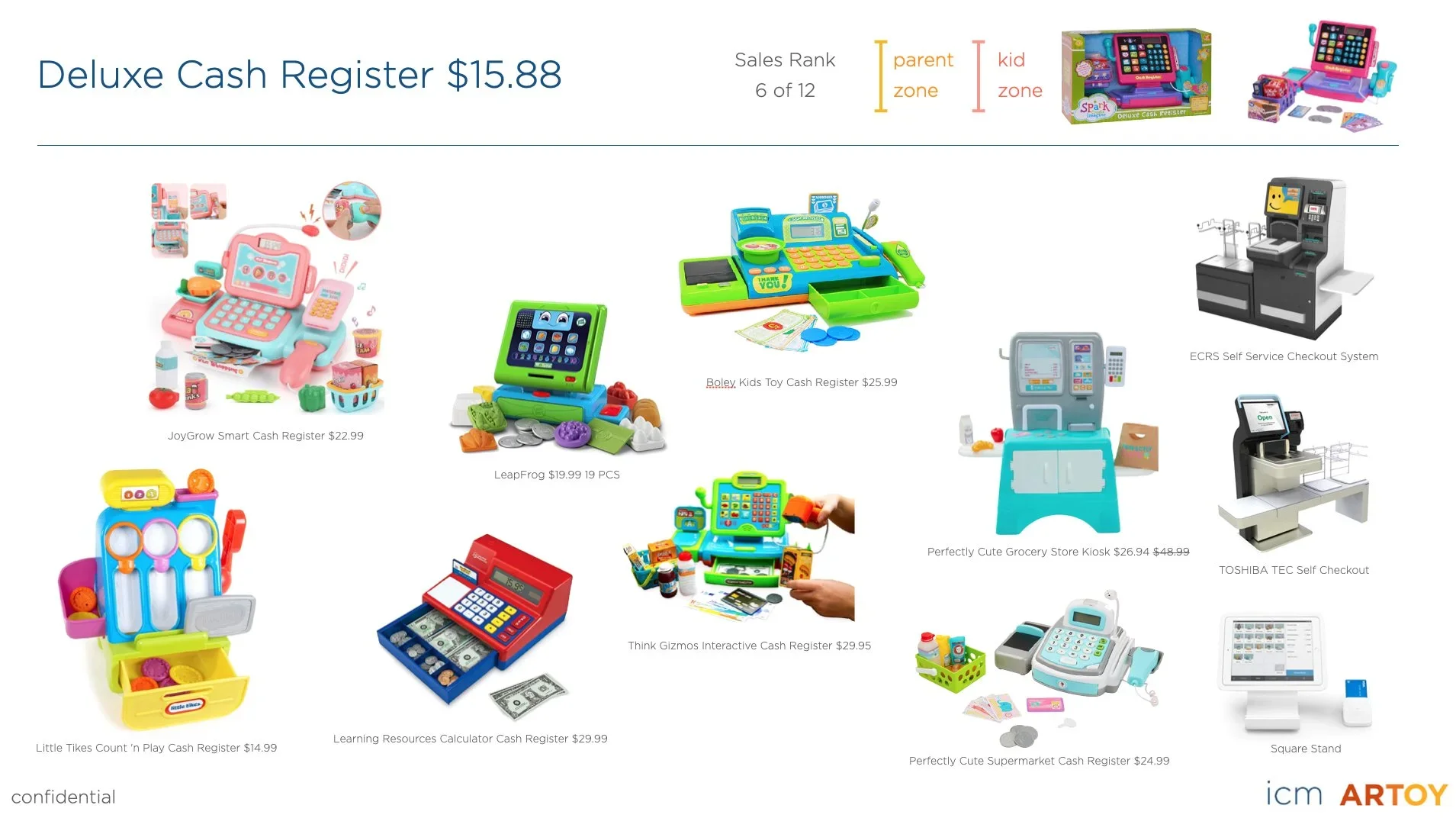
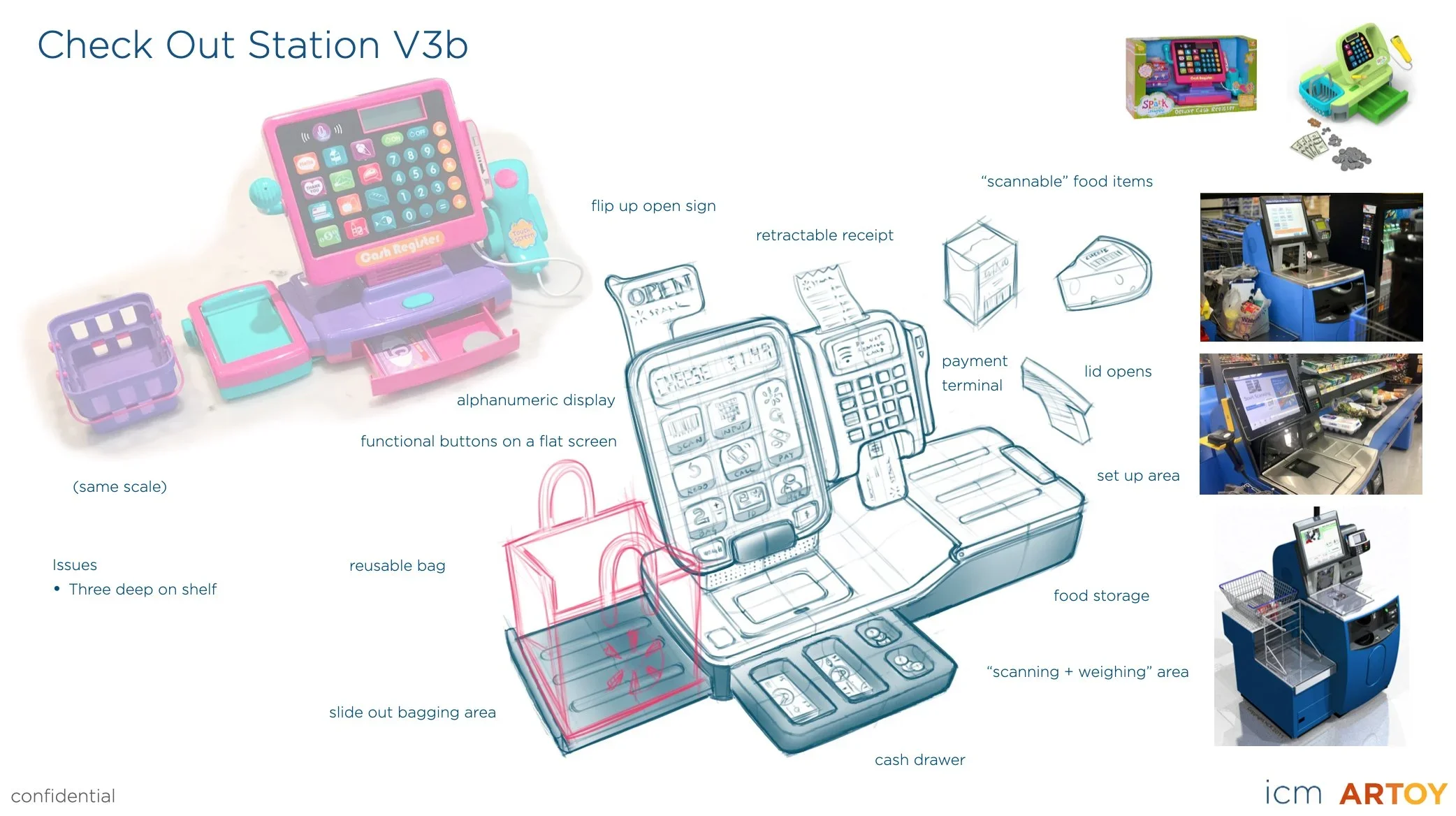
Sketching and rapid prototyping was central to our process—quick, low-resolution sketches and physical models gave the team a tangible sense of scale, proportion, and play pattern long before CAD. These prototypes became essential underlays for refined sketching and final digital development.
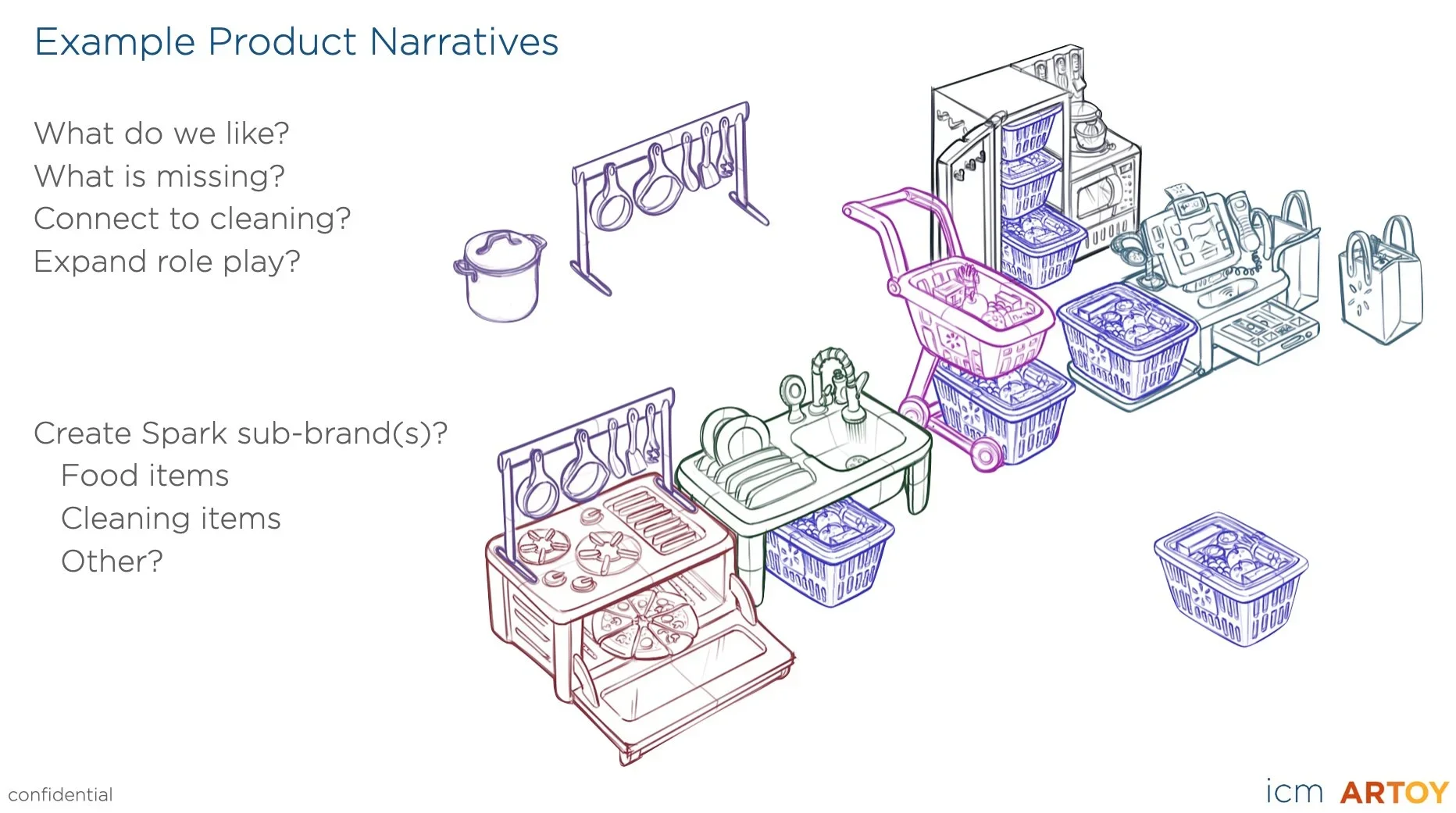
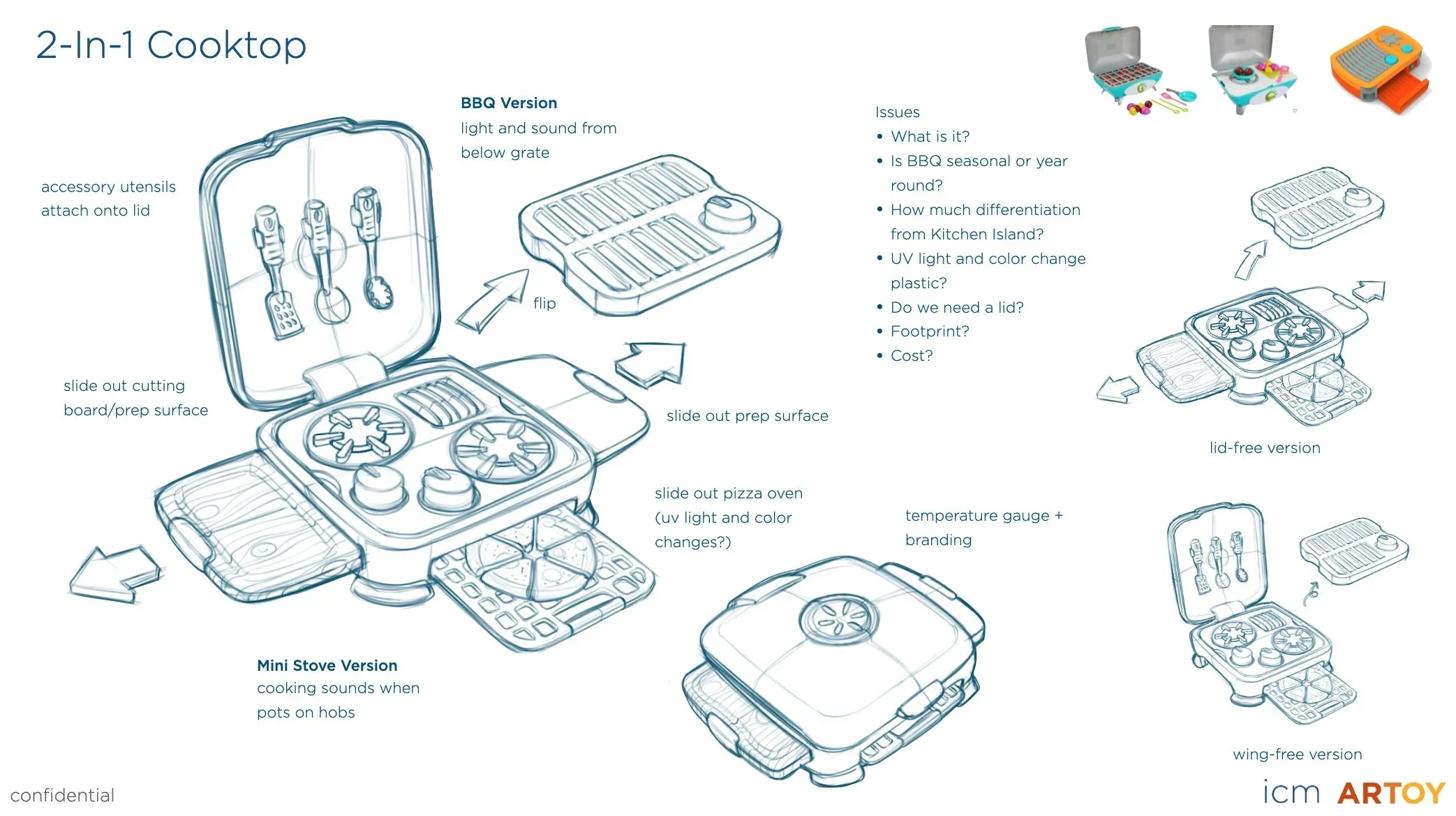
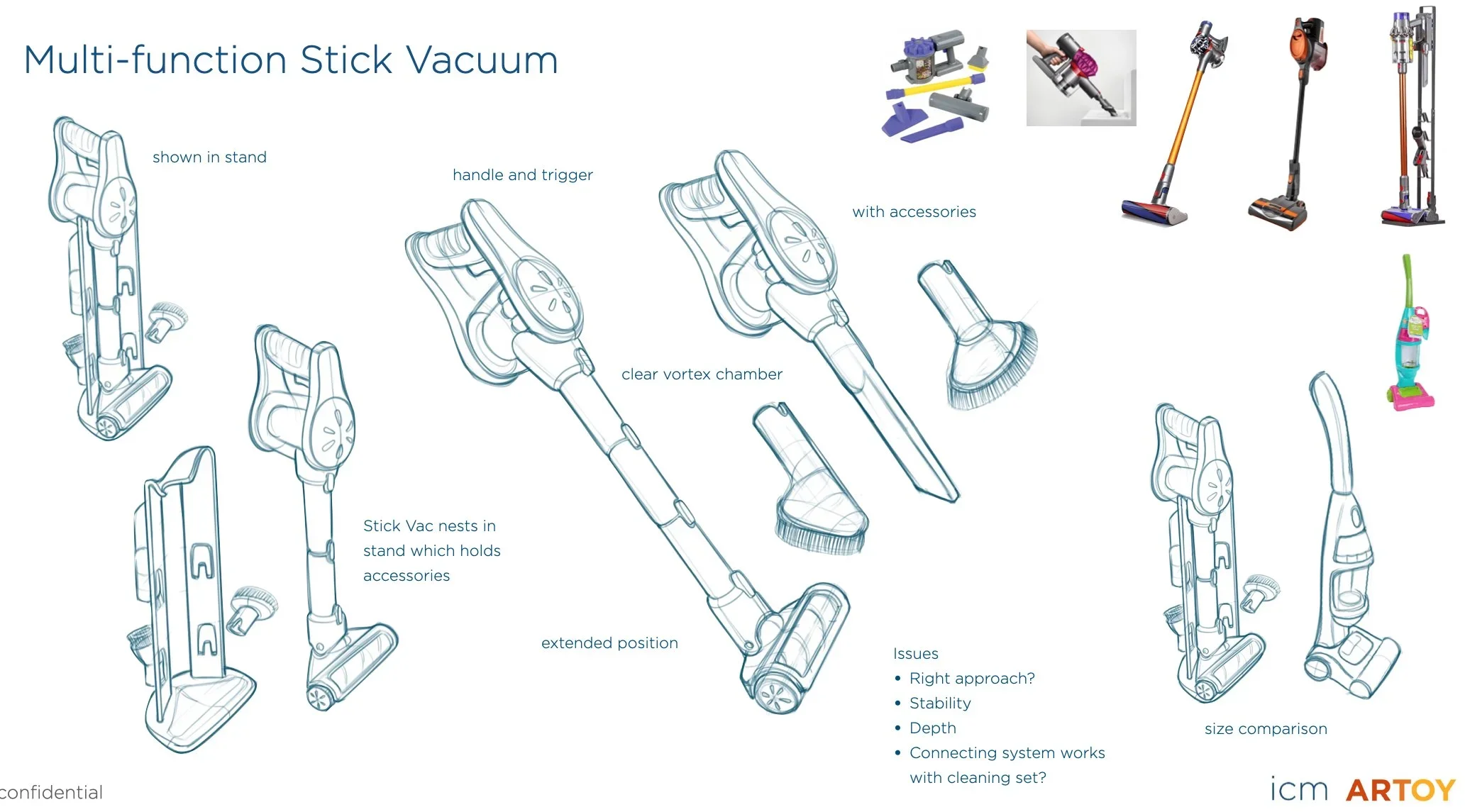
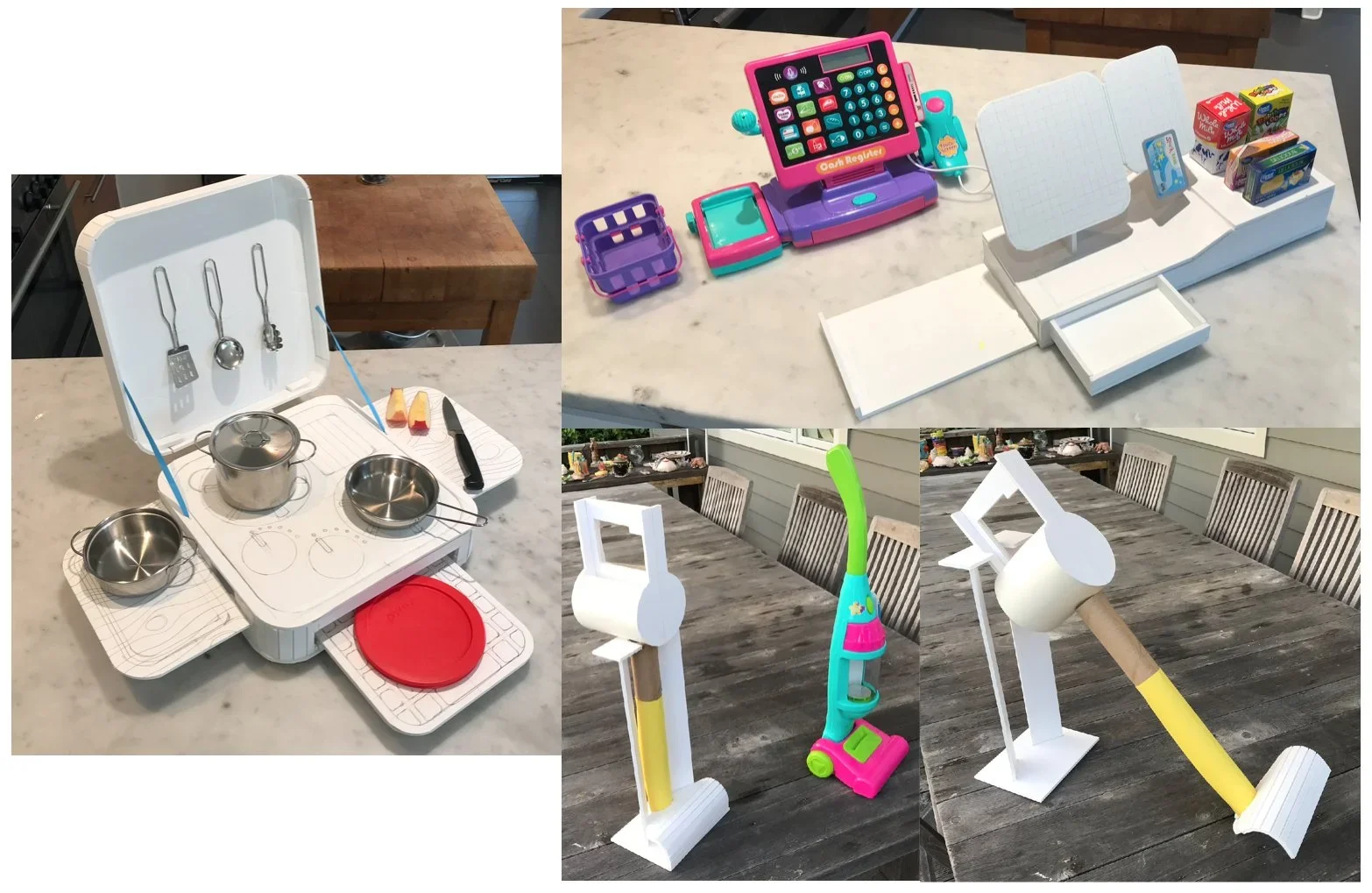
We generated and prototyped dozens of concepts, many of which never made it to shelf. This was intentional. Rapid sketches, rough models, and quick prints let us embrace ambiguity and learn fast—refining what kids enjoyed, what parents trusted, and what the merchant needed. The unused ideas weren’t waste; they were how we arrived at the right products with clarity and confidence.
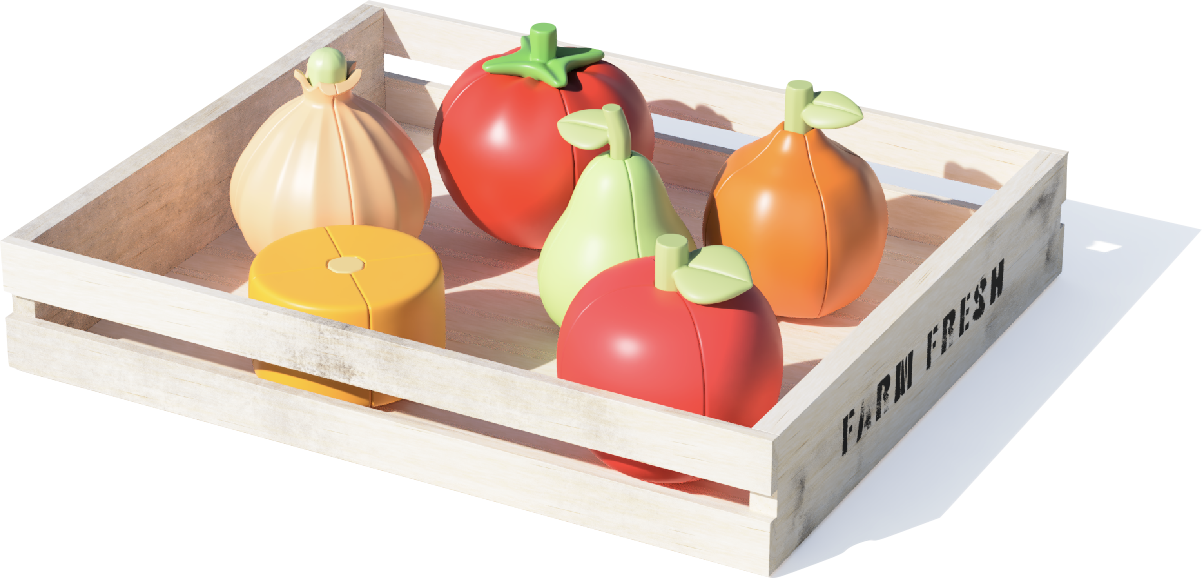

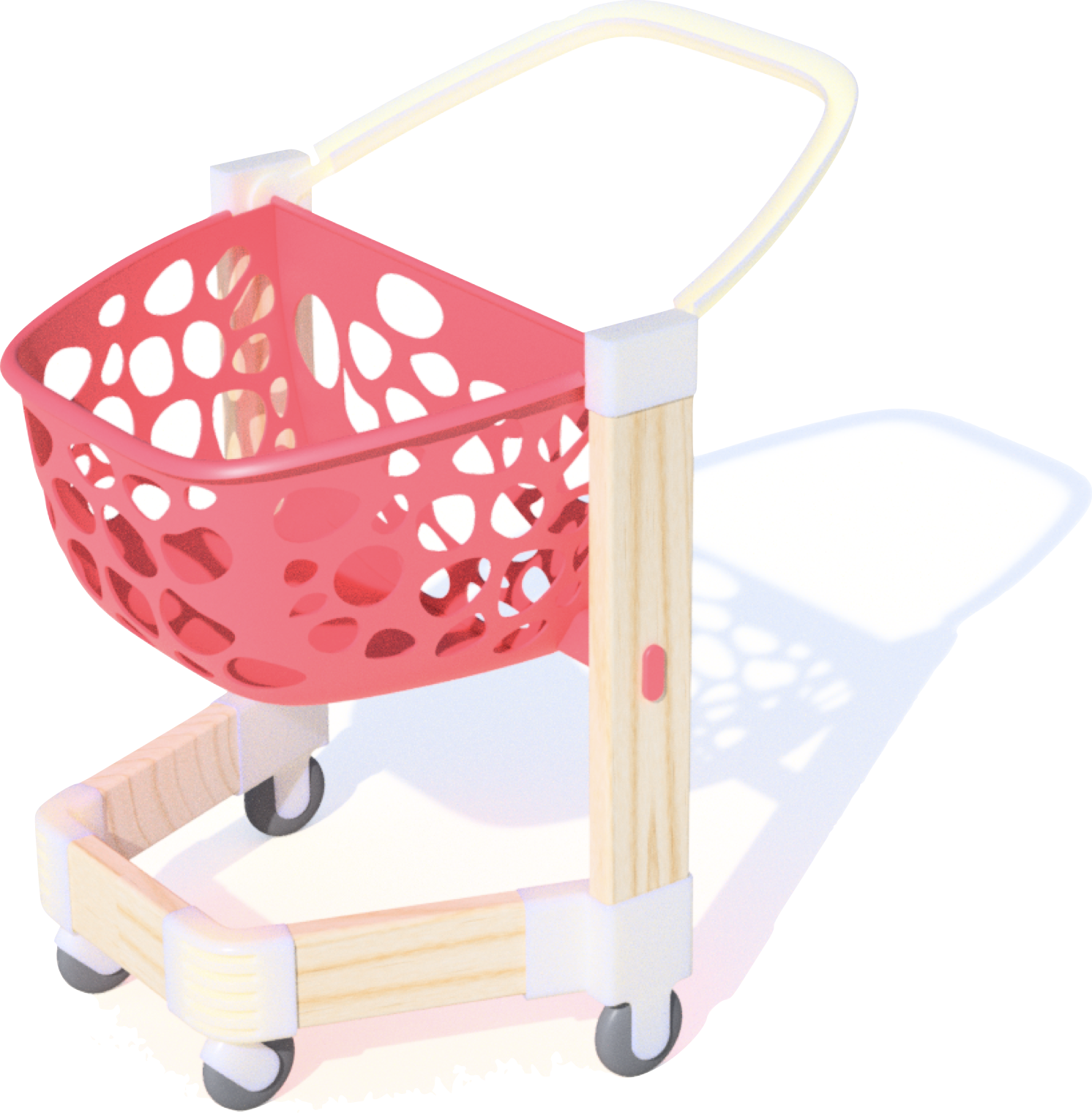
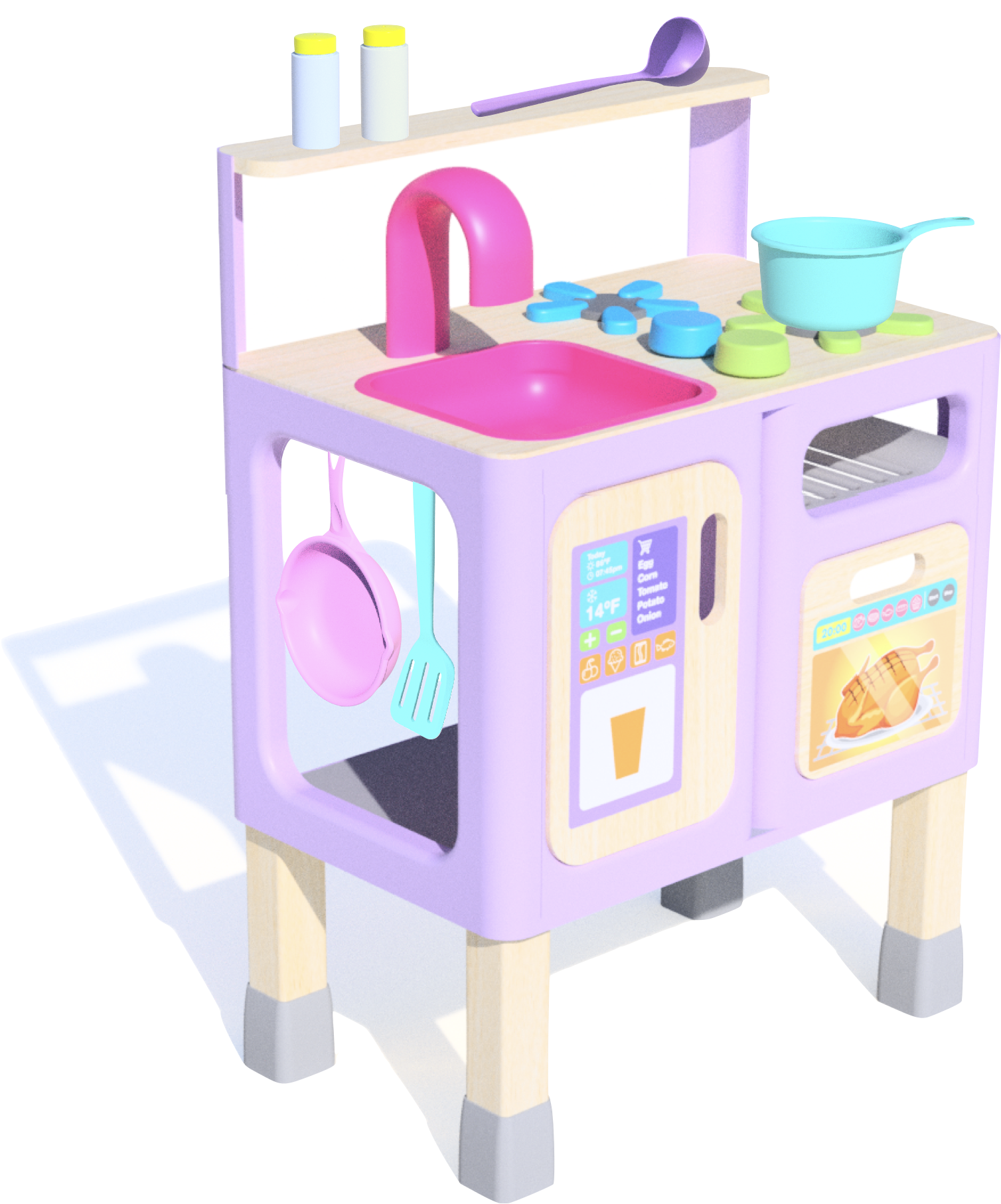
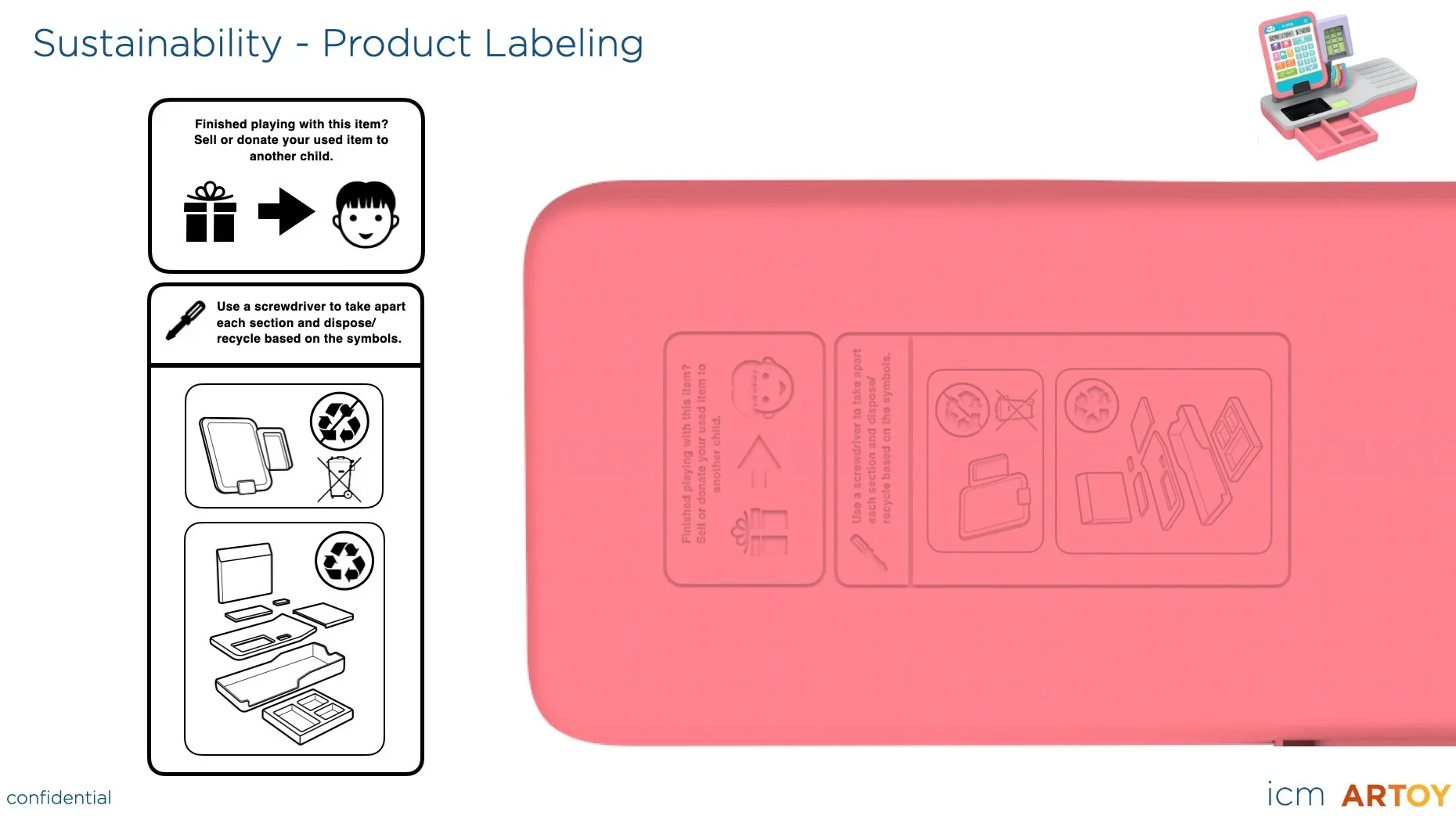
Across the full four-foot system, we ensured the toys not only delivered delightful play experiences but also reflected Walmart’s values around durability, safety, and learning. At the end of each product’s life cycle, we included consumer-facing end-of-life guidance, helping families understand how to reuse, recycle, or responsibly dispose of components.
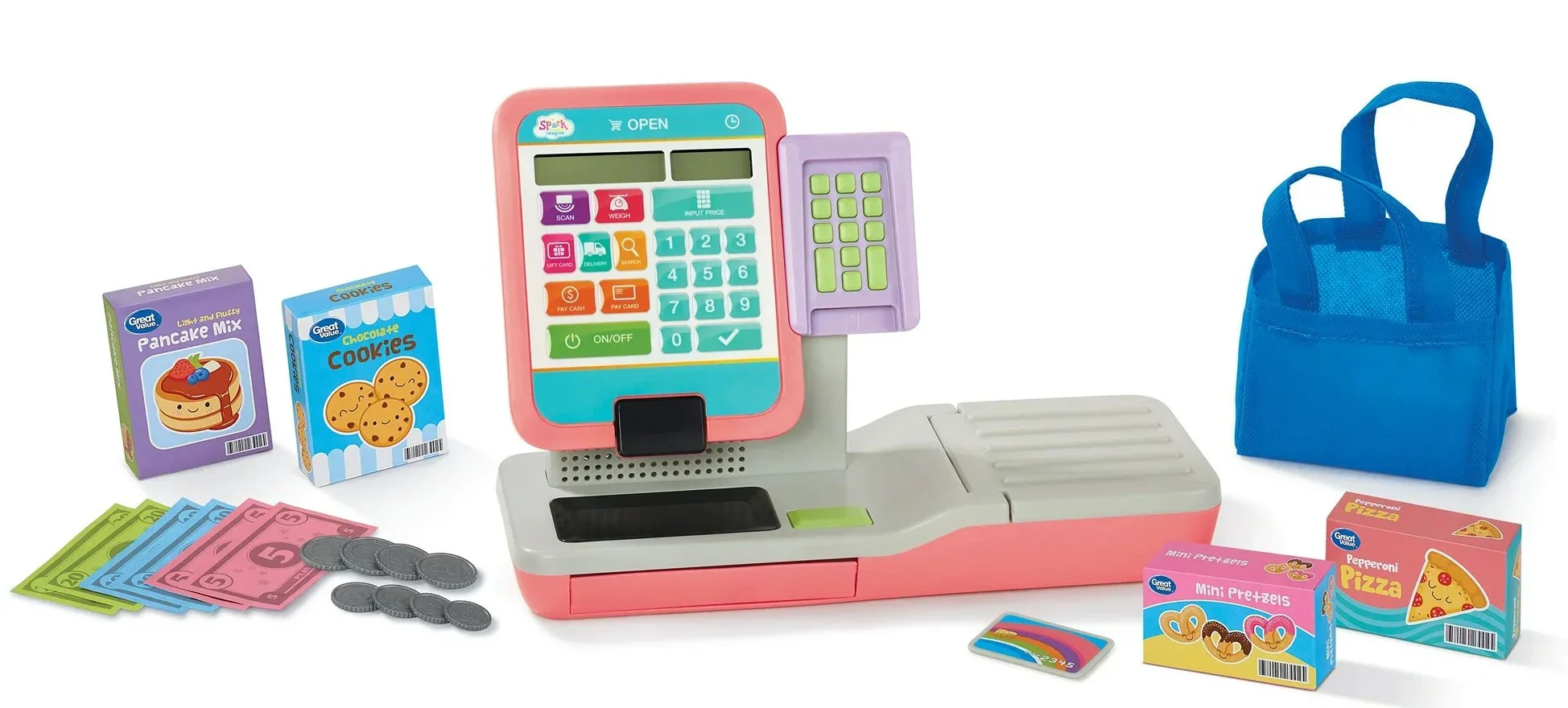
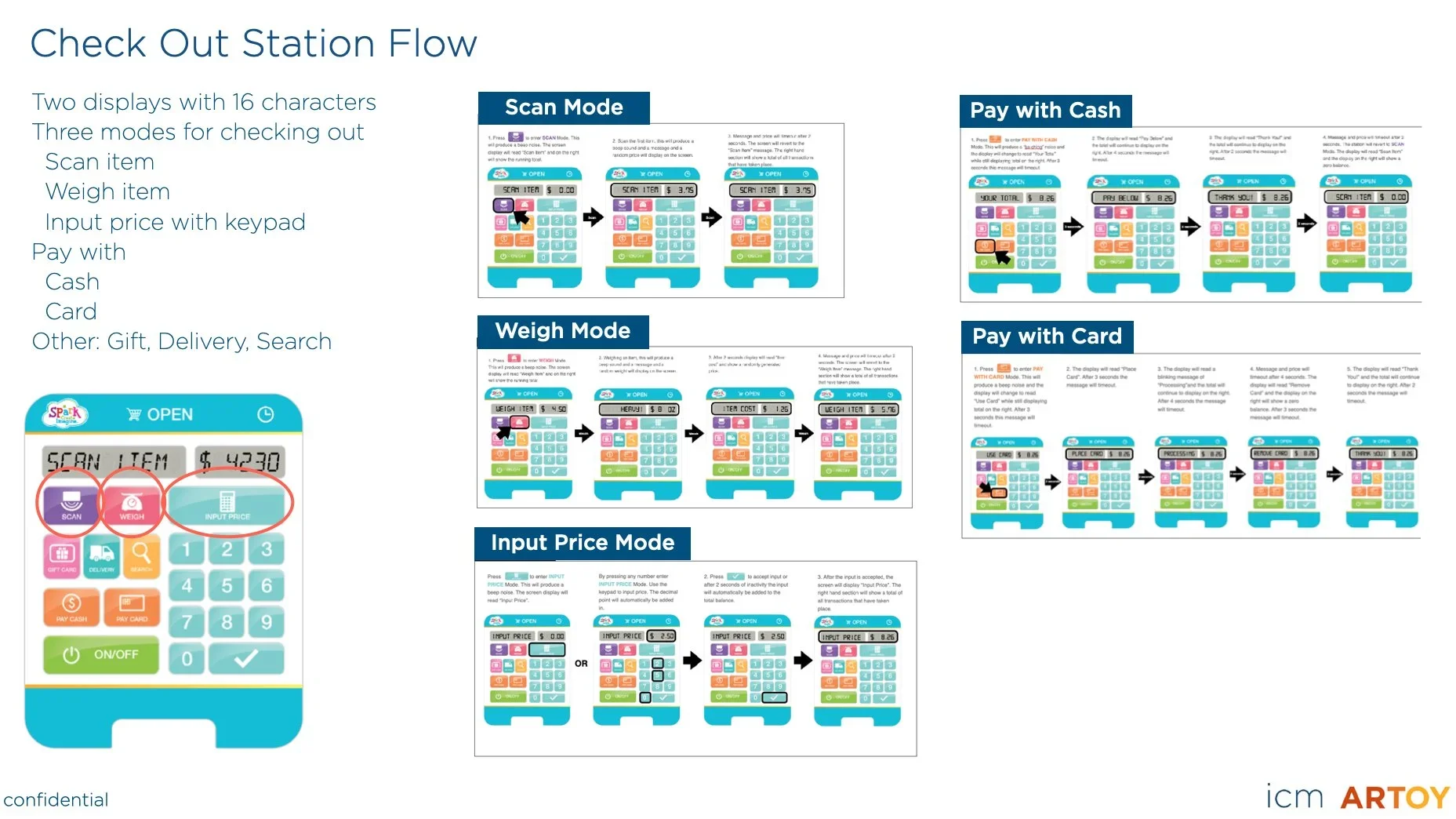
What makes this project unique is that the design strategy didn’t stay on paper—it was fully embraced and executed. The result was a private-label program that, delivered meaningful play experiences, created internal cohesion across 28 skus and over 100 components, elevated Walmart’s own Spark brand, and generated significant measurable commercial upside for all partners involved. This work showcases what’s possible when design, merchants, and manufacturing align behind a shared strategy—and when a retailer entrusts a design partner with building an entire category from the ground up.
For a deeper look at the merchant-centric design process and how it shaped the final outcomes, you can watch the full conversation here.