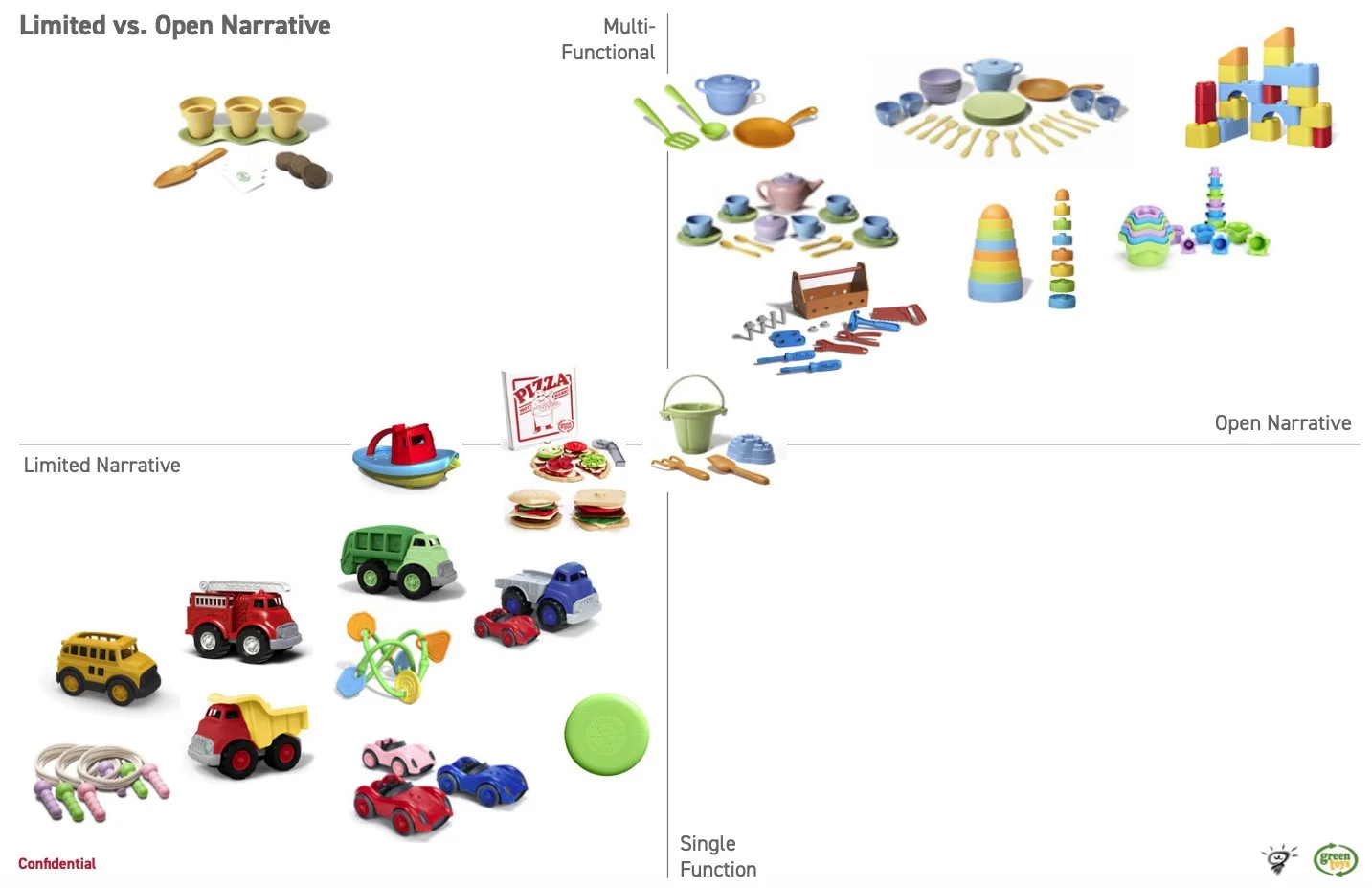
My relationship with Green Toys spanned more than eight years, beginning as an outside strategy consultant and ultimately leading to my role as Chief Creative Officer. During that time, I helped guide the company's evolution from a focused startup with a handful of iconic products into a broader, more cohesive brand with new categories, richer play experiences, and a scalable innovation strategy.
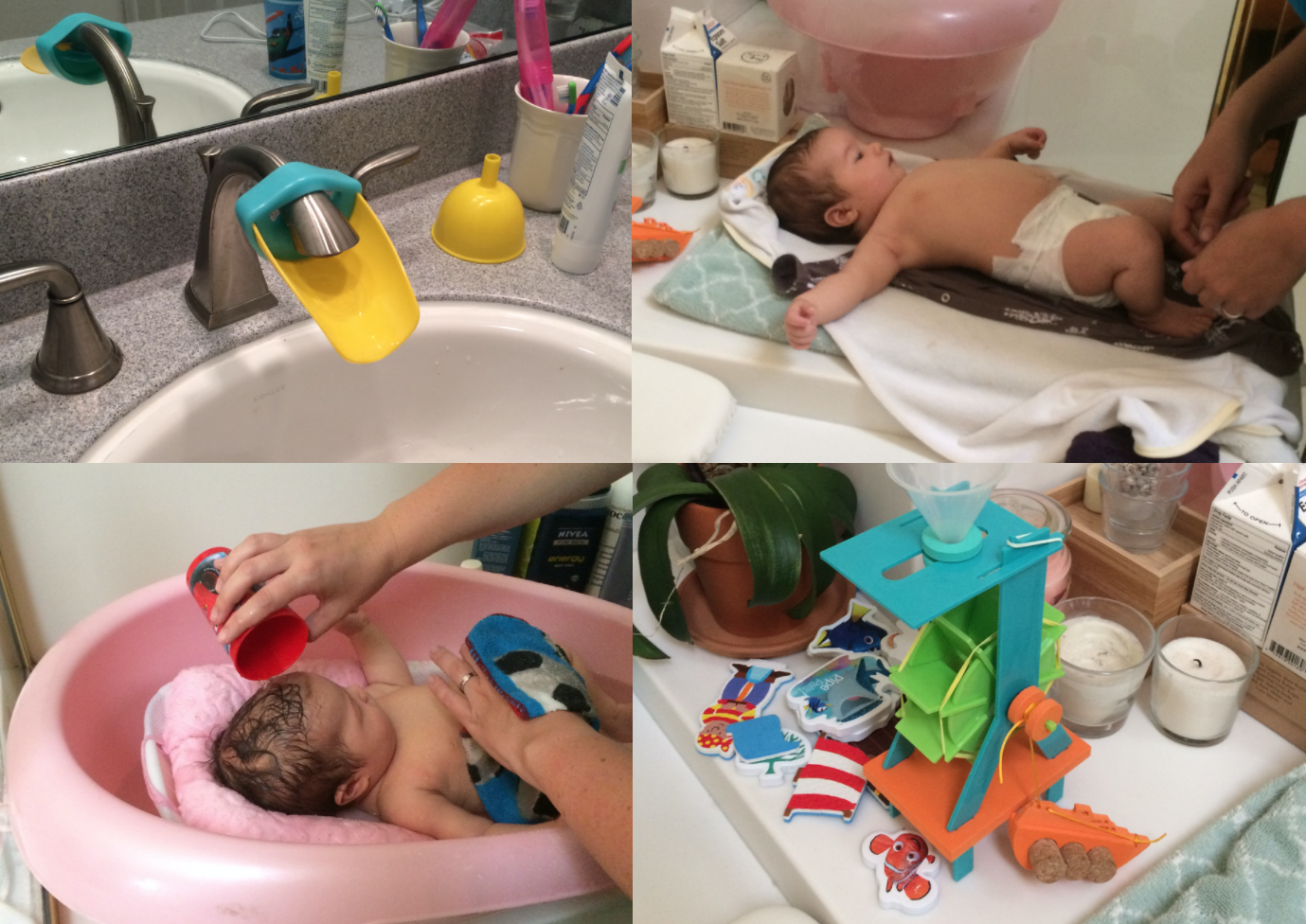
Green Toys had established a strong presence in bath play, but the category had begun to stagnate. I assembled and led a multidisciplinary team to research children's bath routines, observe how families interacted with existing products, and challenge conventional thinking about water play. Rather than designing another collection of floating toys, we asked how water itself could become an active part of the play experience.
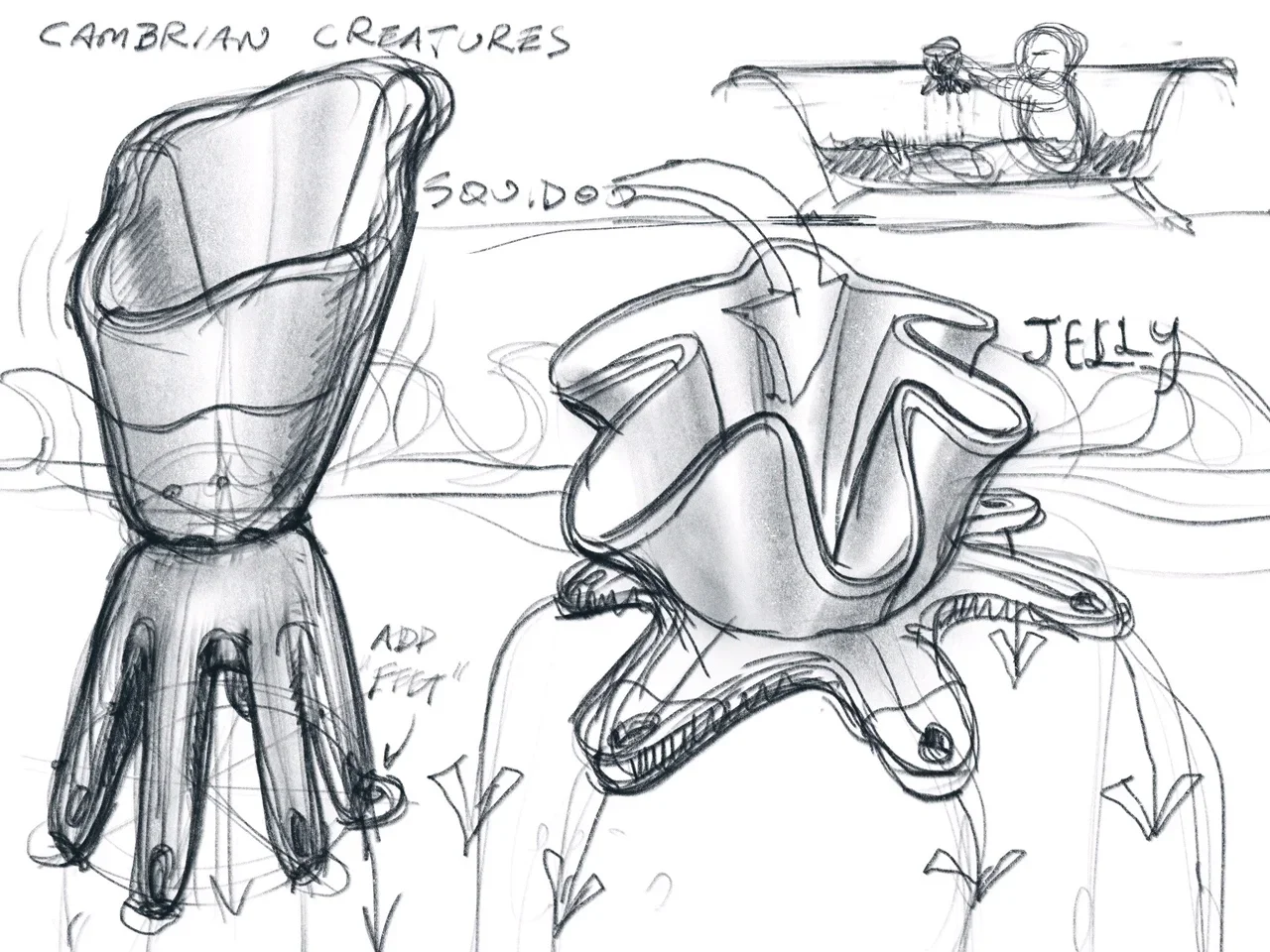
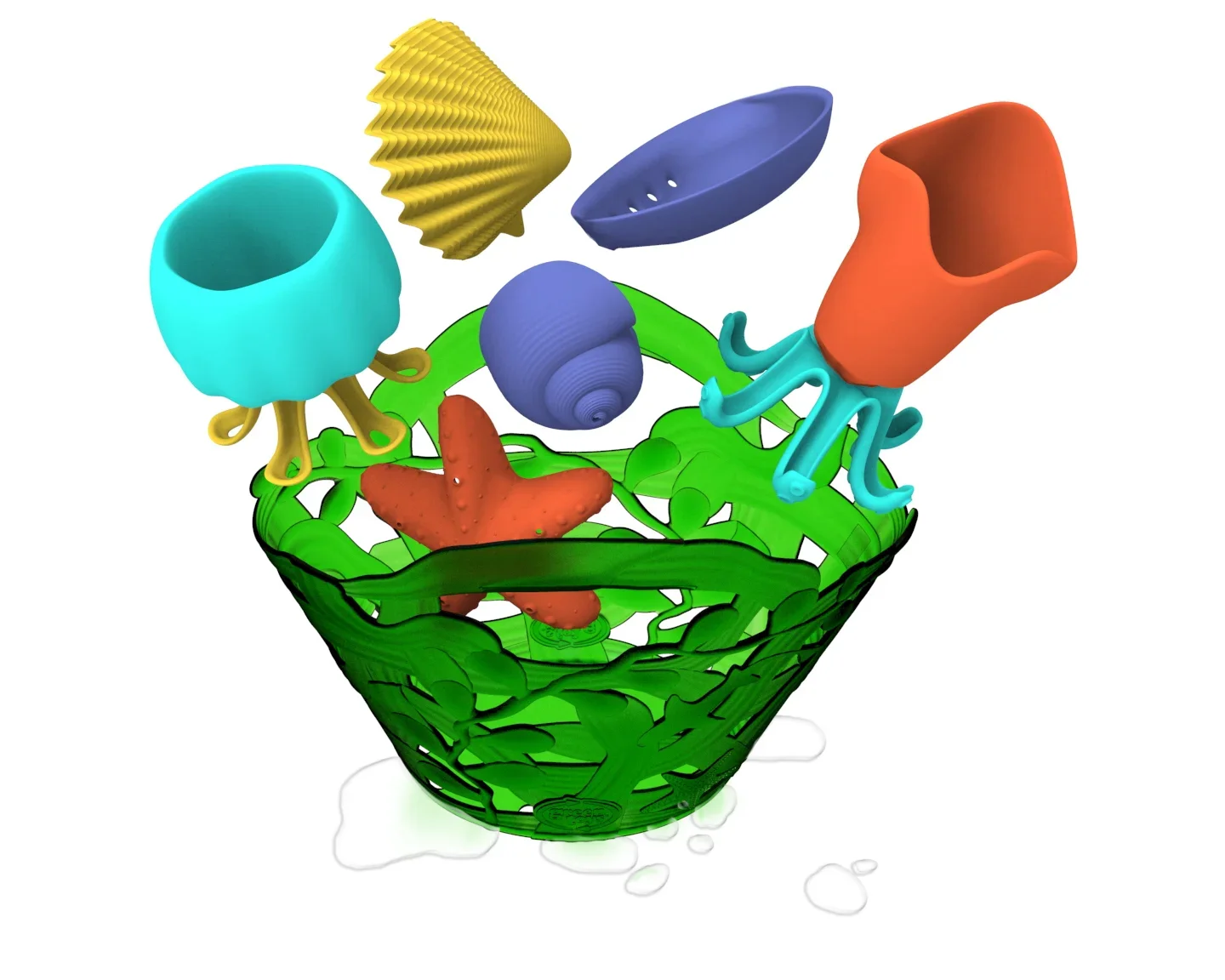
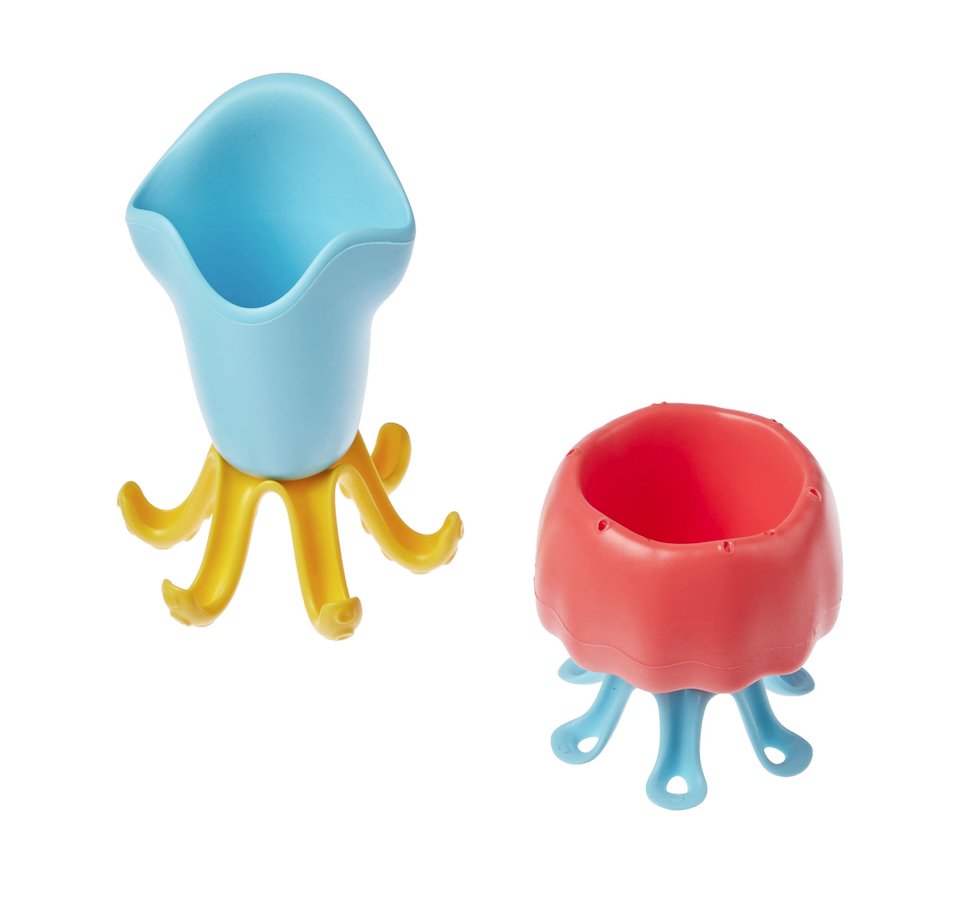
The result was the Tide Pool collection—a family of tactile sea creatures inspired by the rich ecosystem of the intertidal zone. Each creature manipulated water in a unique and unexpected way, encouraging exploration, experimentation, and open-ended play. The system was completed with a recycled-plastic kelp basket that not only tied the collection together visually, but also scooped up the toys, drained them naturally, and could sit beside the tub or hang neatly for storage.
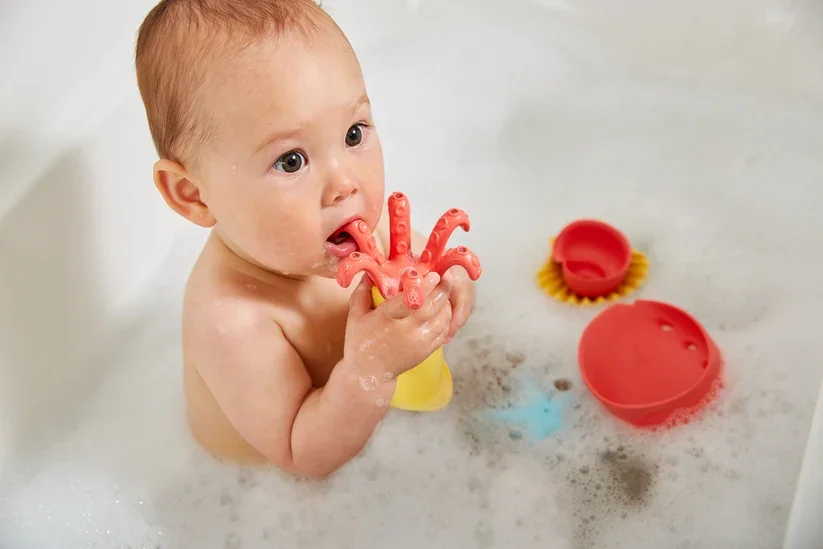
More than a successful product launch, Tide Pool established a distinctive and own-able direction for the Green Toys bath category. By combining thoughtful play patterns, intuitive cleanup, and sustainable materials into a cohesive system, the collection breathed new life into a mature category and became a commercial success across both e-commerce and mass retail.
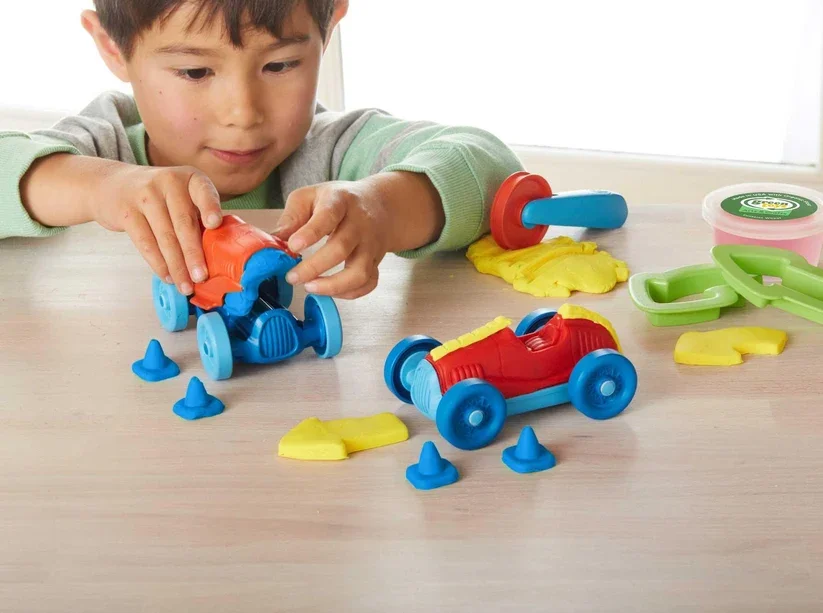
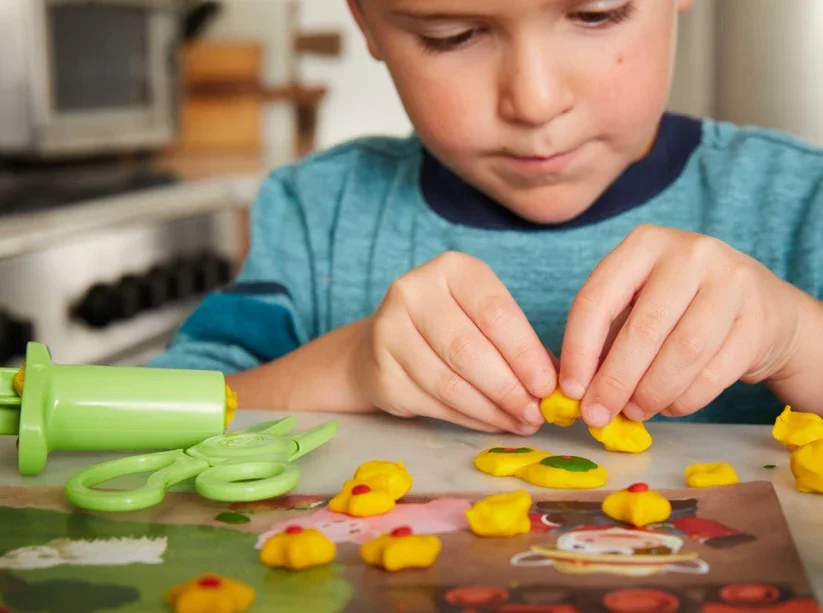
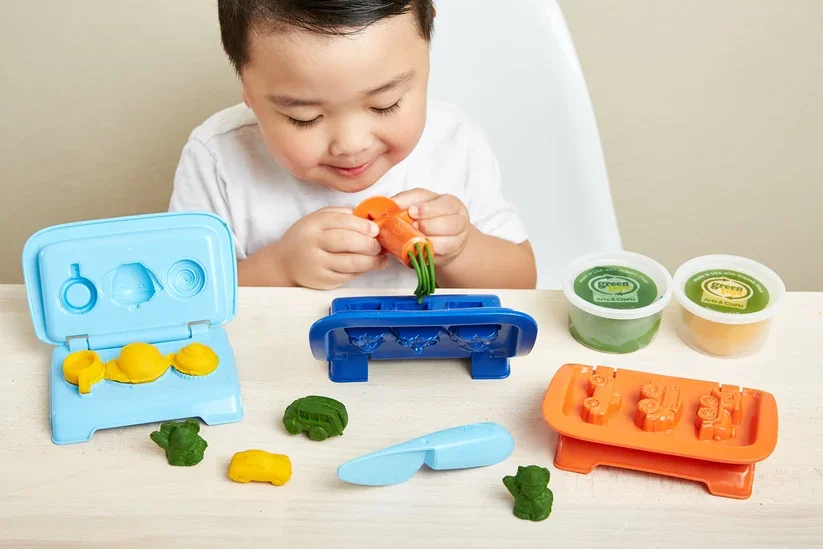
As Chief Creative Officer, I continued to expand the brand into adjacent categories that felt authentic to Green Toys' values. One of the most meaningful was a line of home craft kits built around organic modeling dough. Rather than following the conventional approach used by traditional modeling compounds, we developed a food-safe dough manufactured in a food production facility instead of a chemical factory. This created a compelling extension of the Green Toys promise, giving parents a creative activity that reflected the same commitment to safety, sustainability, and thoughtful design that had earned their trust in the core toy line.
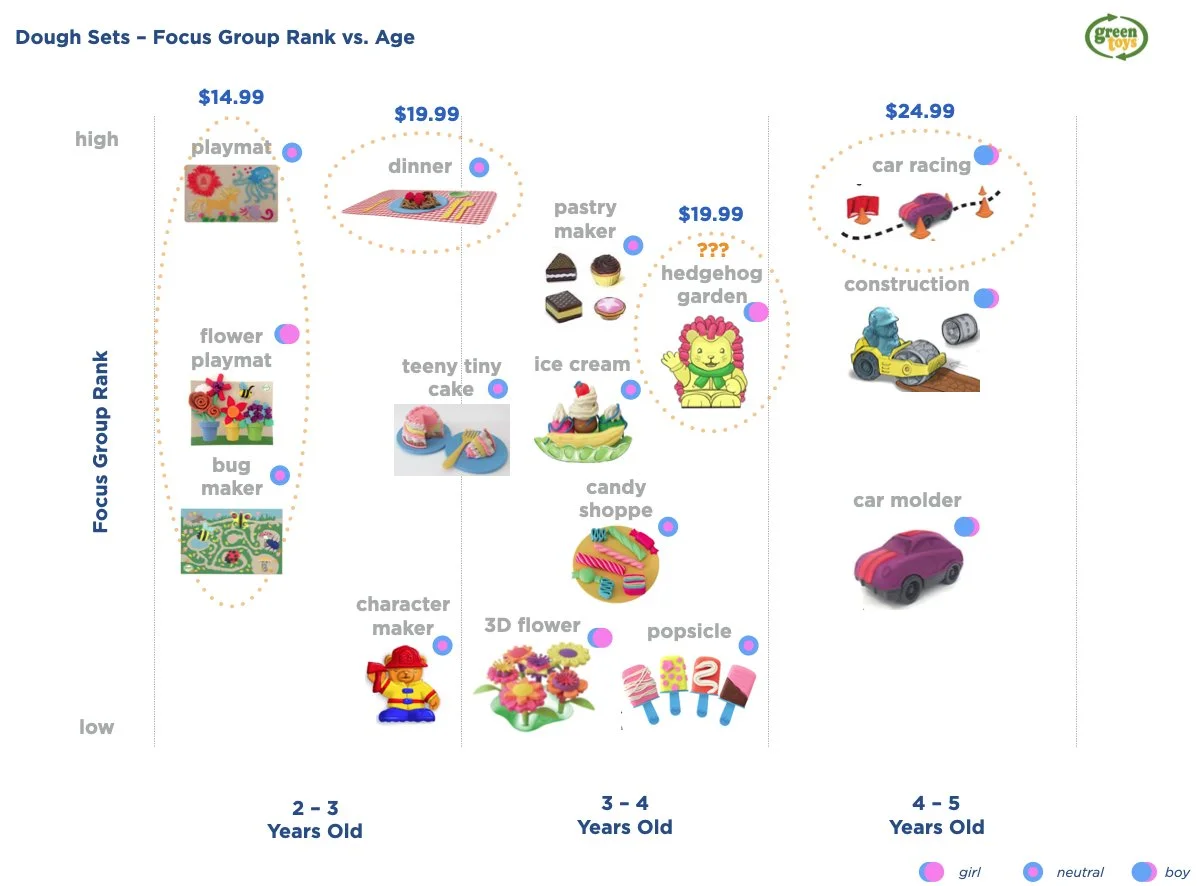
Before designing products, the first challenge was understanding where the brand should grow. I believe the best design comes not from intuition alone, but from listening carefully—to users, retailers, manufacturers, and the market—and allowing those insights to reveal the opportunity. To make sense of complex information, I use mapping frameworks and strategic models that organize diverse inputs into clear patterns. These visual tools create clarity, helping teams understand not only where they are, but where they should go.
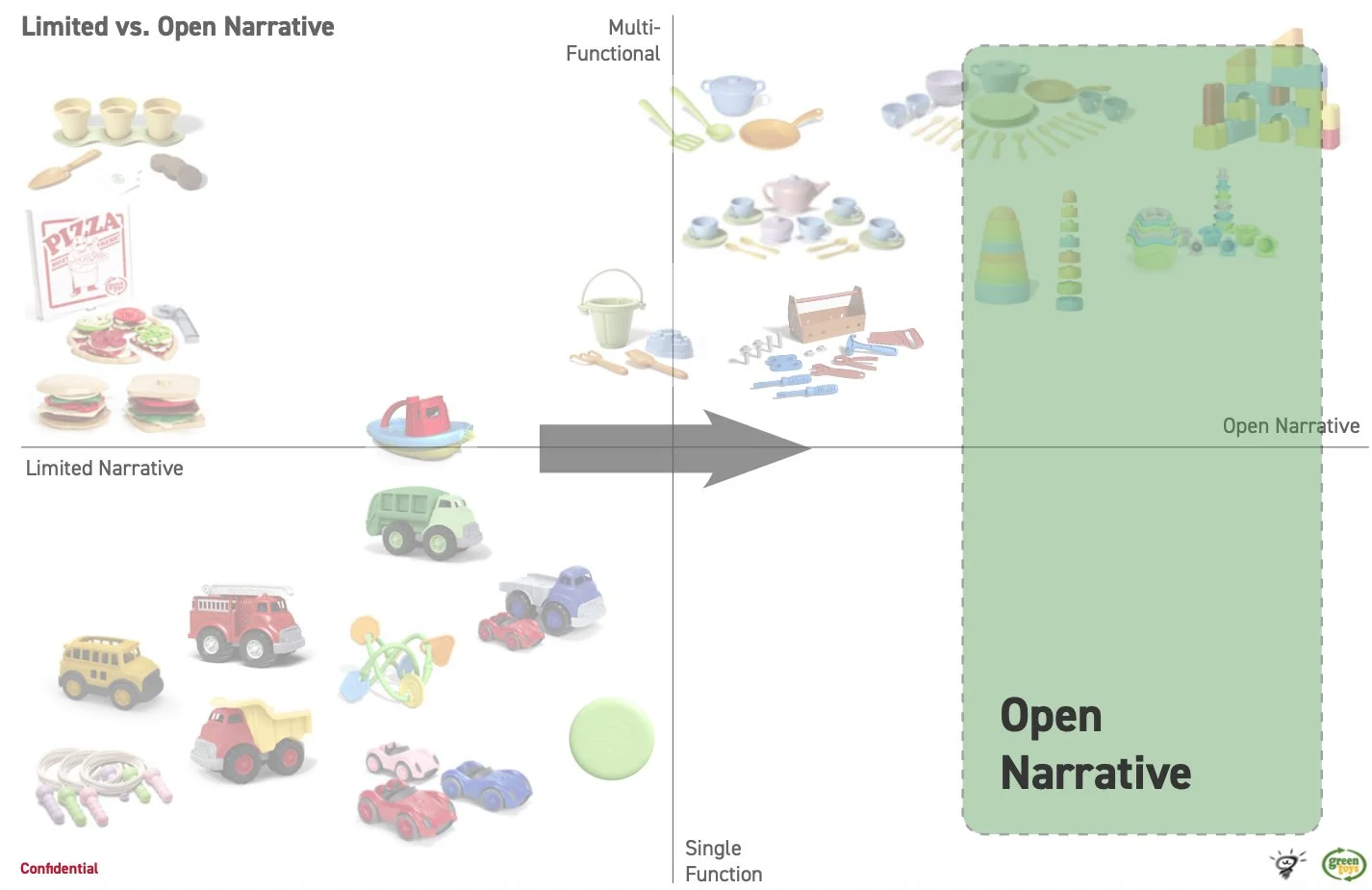
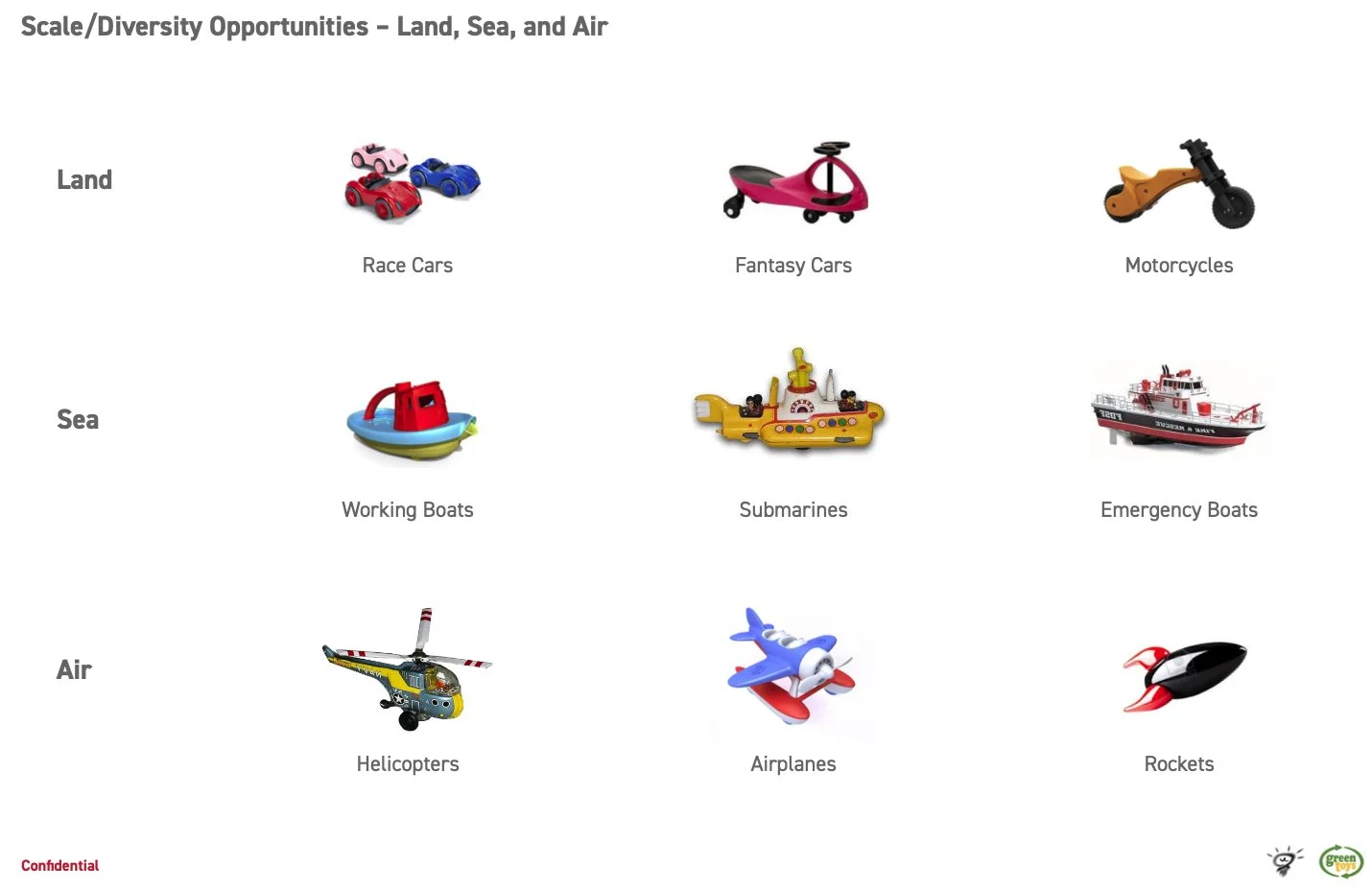
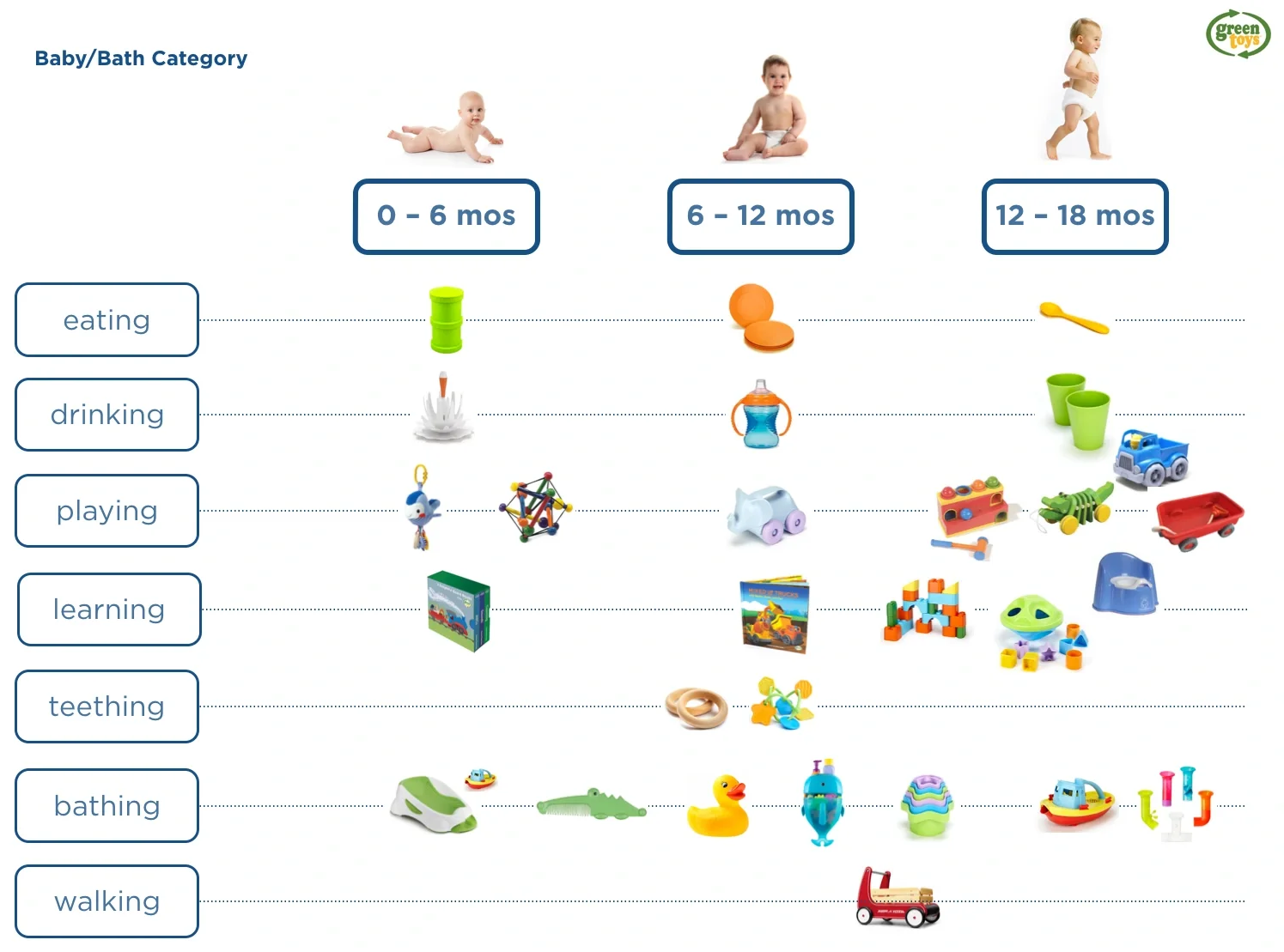
At Green Toys, this approach shaped the company's growth strategy. Through consumer research, retail visits, competitive analysis, and leadership interviews, I developed a framework that identified the brand's greatest strength: toys made from recycled milk jugs in the USA that encourage safe, open-ended play. Rather than chasing unrelated categories, we built on that foundation, expanding the product line into the worlds of land, sea, and air while creating a more connected ecosystem of products that encouraged imaginative storytelling.
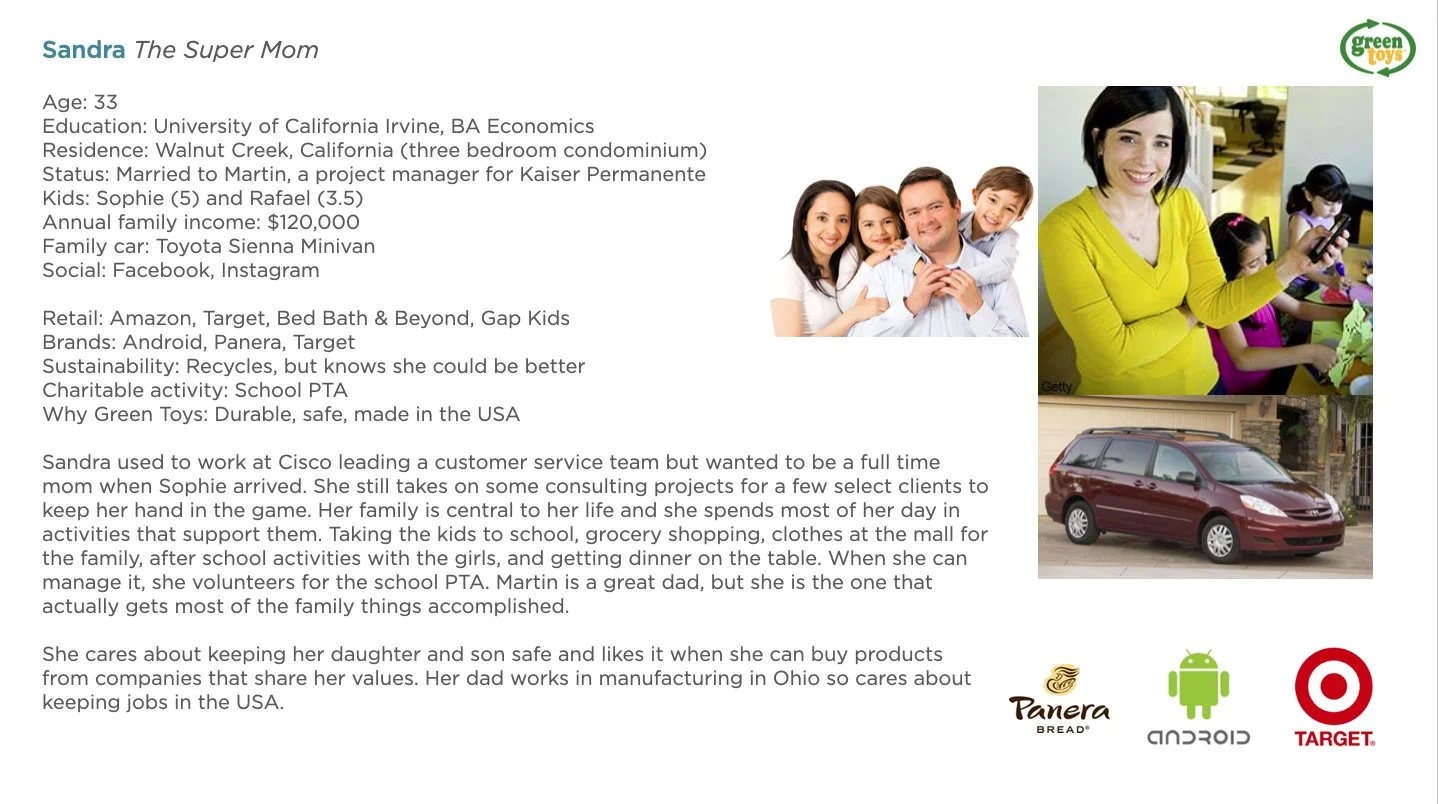
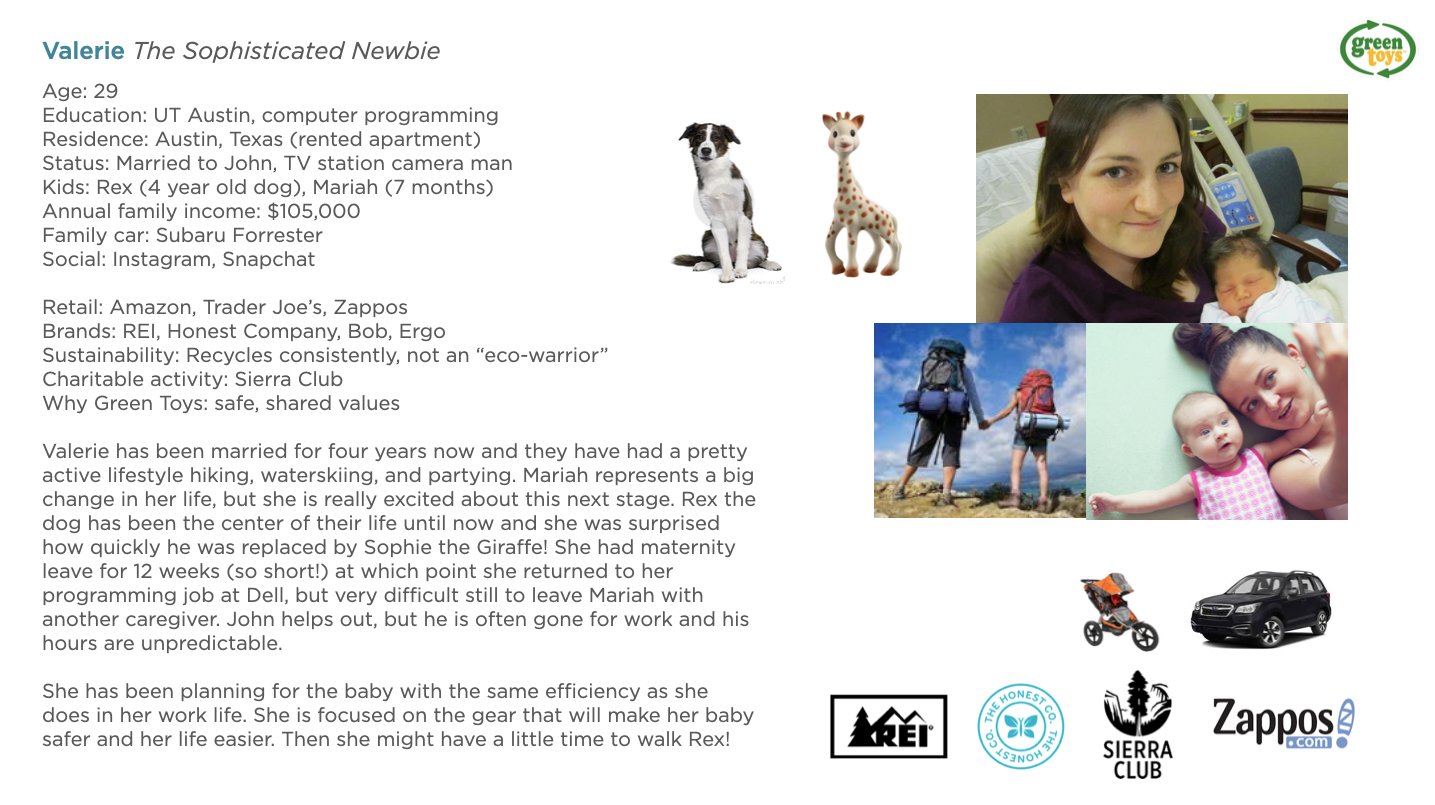
Throughout my time with Green Toys, my role extended well beyond product design. I helped shape innovation strategy, identify meaningful growth opportunities, build coherent product families, and ensure that every new category reinforced the brand's core values. The result was a stronger, more scalable product portfolio that expanded the brand while remaining true to the principles that made Green Toys distinctive in the first place.